
How bread rises
Bread rises because yeast, or a chemical raiser, fills the dough with gas. Heat then sets the bubbles in place.
Listen is a Plus feature Upgrade
Listening is not supported in this browser.
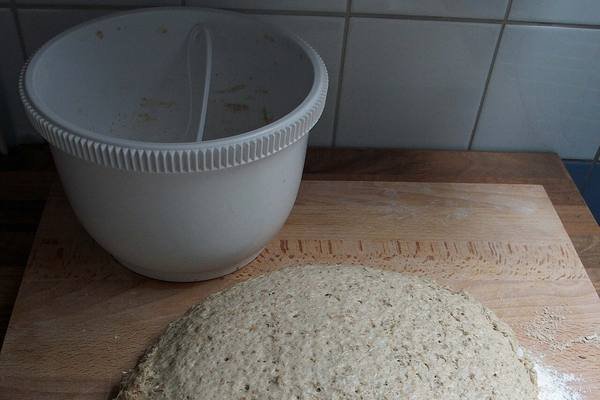
Wheat flour holds two proteins, glutenin and gliadin. When you add water and knead, they join into gluten, an elastic network. That network is what lets dough stretch around bubbles instead of tearing.
Baker’s yeast is a living fungus. Given flour, water, and a little warmth, it feeds on sugars and gives off carbon dioxide and alcohol. The gas inflates the gluten. The alcohol mostly bakes away. This is fermentation, the same broad idea as in brewing, with a different goal.
Yeast at work
A slow rise in a cool place gives the yeast time and lets bacteria in a sourdough starter add acids. Those acids are why sourdough tastes tangy. A fast rise with more yeast is milder and quicker. Both are the same gas in the same network.
Baking powder and bicarbonate are the non-living alternative, used in cakes and soda bread. They release carbon dioxide when they meet moisture and heat, or an acid. There is no long fermentation and little of the flavour yeast would have made.
In the oven
In the oven the gas expands further, the bubbles grow, and then the heat sets the starch and the gluten. The structure firms. That last burst is oven spring. If the dough goes into a cold, slack state with weak gluten, it spreads instead of rising.
A crust browns by heat and by reactions between sugars and proteins at the surface. Steam in the oven keeps the surface flexible for a little longer, so the loaf can spring before the crust hardens.
Yeast at work
Bread rises because yeast, or a chemical raiser, fills the dough with gas. Heat then sets the bubbles in place. Wheat flour holds two proteins, glutenin and gliadin. When you add water and knead, they join into gluten, an elastic network.
Put those two statements side by side. The first sets the condition. The second says what happens once that condition is met. How bread rises needs both. Drop the first and the second has nothing to explain. Drop the second and the first is only the scene.
In the oven
When you add water and knead, they join into gluten, an elastic network. That network is what lets dough stretch around bubbles instead of tearing.
The order is the explanation. What the first sentence names has to be there before the result in the second sentence can show up. The piece does not ask you to accept the result first and hunt for a cause afterwards.
A check you can make
That network is what lets dough stretch around bubbles instead of tearing. Baker’s yeast is a living fungus.
A fair check is sequential. Confirm the first statement. Then see whether the second is the result of it, rather than a separate fact parked in the same piece. If the result shows up without the condition, this account does not cover what you are looking at.
The limit of the claim
Baker’s yeast is a living fungus. Given flour, water, and a little warmth, it feeds on sugars and gives off carbon dioxide and alcohol.
The two statements do different jobs. One says what is there, what it is made of, or what acts on it. The other says the change that follows. The title names the change. It is not an inventory of parts.
The same steps, in order
Given flour, water, and a little warmth, it feeds on sugars and gives off carbon dioxide and alcohol. The gas inflates the gluten.
Nothing in the second statement cancels the first. It carries the first forward or marks the limit of it. Remember only the result, and the cause goes missing. Remember only the cause, and you will not know what the piece says happens next.
Why the order matters
The gas inflates the gluten. The alcohol mostly bakes away.
Read them as one path. Start at the first full stop and do not skip to the outcome. The words between the two statements are the mechanism. The title is the name of that path, not a second claim.
Condition, then outcome
The alcohol mostly bakes away. This is fermentation, the same broad idea as in brewing, with a different goal.
The first statement can be true and still not finish the job. The second statement is the job finishing. Hold both, and the paragraph above stops being a list. It becomes the reason the title is worded as it is.
What the title is naming
This is fermentation, the same broad idea as in brewing, with a different goal. A slow rise in a cool place gives the yeast time and lets bacteria in a sourdough starter add acids.
If you wanted a shorter version, it would be those two sentences and nothing else. Everything added around them is there so the dependence is obvious: the second does not happen unless the first has happened.
What has to come first
A slow rise in a cool place gives the yeast time and lets bacteria in a sourdough starter add acids. Those acids are why sourdough tastes tangy.
Put those two statements side by side. The first sets the condition. The second says what happens once that condition is met. How bread rises needs both. Drop the first and the second has nothing to explain. Drop the second and the first is only the scene.
No correction has been appended to this story. If a line is wrong, tell the newsroom.