
How butter is churned
Butter is made by agitating cream until the fat globules stick together and separate from the buttermilk.
Listen is a Plus feature Upgrade
Listening is not supported in this browser.
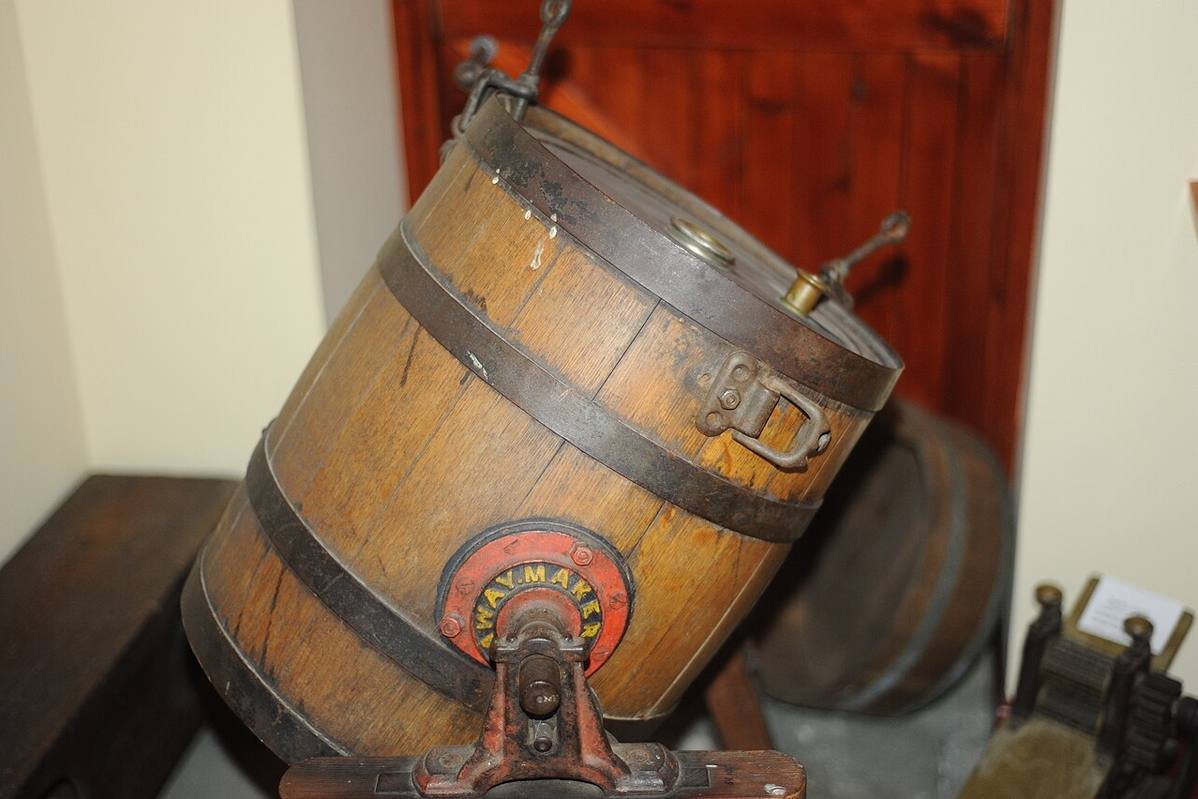
Cream is the fat-rich part of milk. Under a microscope the fat sits in tiny globules, each wrapped in a membrane that keeps it dispersed in the water. Left alone, cream stays smooth.
Churning, or whisking for a long time, knocks those globules together. The membranes tear. Exposed fat is sticky, so globules join into larger and larger clots. You can hear the sound of the cream change as this happens.
Fat globules in cream
Suddenly the fat clumps and a watery liquid separates. That liquid is buttermilk, the part of the cream that was not fat. Traditional buttermilk is this liquid, not a cultured milk, though the word is also used for a cultured drink.
The clumps are butter. They are worked, pressed, and sometimes washed to drive out more of the trapped liquid. Less moisture means the butter keeps longer and the texture is tighter.
From clots to a pat
Salt can be worked in at this stage. It seasons the butter and slows microbes. Unsalted butter relies on the cold and on cleanliness for its keeping.
Warm cream turns to butter faster but can become greasy. Cold cream takes longer. The end point is the same: fat gathered into a mass, and the watery part poured off.
Fat globules in cream
Butter is made by agitating cream until the fat globules stick together and separate from the buttermilk. Cream is the fat-rich part of milk. Under a microscope the fat sits in tiny globules, each wrapped in a membrane that keeps it dispersed in the water.
Put those two statements side by side. The first sets the condition. The second says what happens once that condition is met. How butter is churned needs both. Drop the first and the second has nothing to explain. Drop the second and the first is only the scene.
From clots to a pat
Under a microscope the fat sits in tiny globules, each wrapped in a membrane that keeps it dispersed in the water. Left alone, cream stays smooth.
The order is the explanation. What the first sentence names has to be there before the result in the second sentence can show up. The piece does not ask you to accept the result first and hunt for a cause afterwards.
A check you can make
Left alone, cream stays smooth. Churning, or whisking for a long time, knocks those globules together.
A fair check is sequential. Confirm the first statement. Then see whether the second is the result of it, rather than a separate fact parked in the same piece. If the result shows up without the condition, this account does not cover what you are looking at.
No correction has been appended to this story. If a line is wrong, tell the newsroom.