
Why a bruise changes colour
A bruise is blood that has leaked under the skin. Its colour changes as the body breaks the blood pigment down.
Listen is a Plus feature Upgrade
Listening is not supported in this browser.
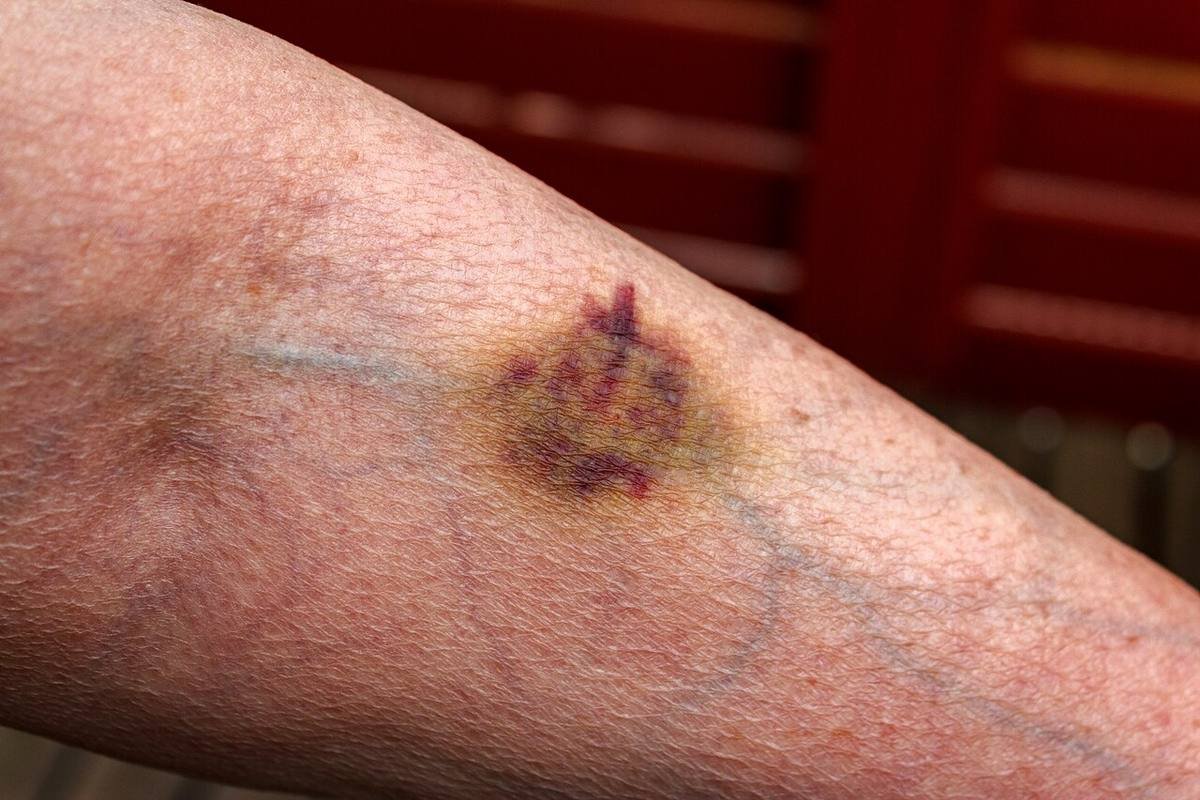
A knock can tear small blood vessels without breaking the skin. Blood leaks into the surrounding tissue and clots there. The skin is still intact, so the blood has nowhere to go. That pool is a bruise.
Fresh blood under the skin looks red or blue-purple. You are seeing haemoglobin, the red pigment in red cells, through the skin. Deeper bruises look darker because more tissue lies over them.
Blood under the skin
Over the next days, scavenging cells break the haemoglobin apart. One product is biliverdin, which is green. Another is bilirubin, which is yellow. The bruise passes through purple, green, and yellow as these pigments dominate in turn.
The same pigments colour a fading black eye or a healing graze. The sequence is the chemistry of clearing blood, not a stain soaking in from outside.
The fading colours
The body also reabsorbs the fluid and repairs the vessels. As the pigment is carried away, the skin returns to its usual colour. A large bruise simply holds more blood and takes longer.
Unexplained bruises, or bruises that do not follow this fade, are a medical question rather than a colour question. The ordinary garden-path bruise is leaked blood being dismantled.
Blood under the skin
A bruise is blood that has leaked under the skin. Its colour changes as the body breaks the blood pigment down. A knock can tear small blood vessels without breaking the skin. Blood leaks into the surrounding tissue and clots there.
Put those two statements side by side. The first sets the condition. The second says what happens once that condition is met. Why a bruise changes colour needs both. Drop the first and the second has nothing to explain. Drop the second and the first is only the scene.
The fading colours
Blood leaks into the surrounding tissue and clots there. The skin is still intact, so the blood has nowhere to go.
The order is the explanation. What the first sentence names has to be there before the result in the second sentence can show up. The piece does not ask you to accept the result first and hunt for a cause afterwards.
A check you can make
The skin is still intact, so the blood has nowhere to go. That pool is a bruise.
A fair check is sequential. Confirm the first statement. Then see whether the second is the result of it, rather than a separate fact parked in the same piece. If the result shows up without the condition, this account does not cover what you are looking at.
The limit of the claim
That pool is a bruise. Fresh blood under the skin looks red or blue-purple.
The two statements do different jobs. One says what is there, what it is made of, or what acts on it. The other says the change that follows. The title names the change. It is not an inventory of parts.
No correction has been appended to this story. If a line is wrong, tell the newsroom.