
Why we blink
A blink spreads tears and clears the surface of the eye. Most blinks happen without a decision.
Listen is a Plus feature Upgrade
Listening is not supported in this browser.
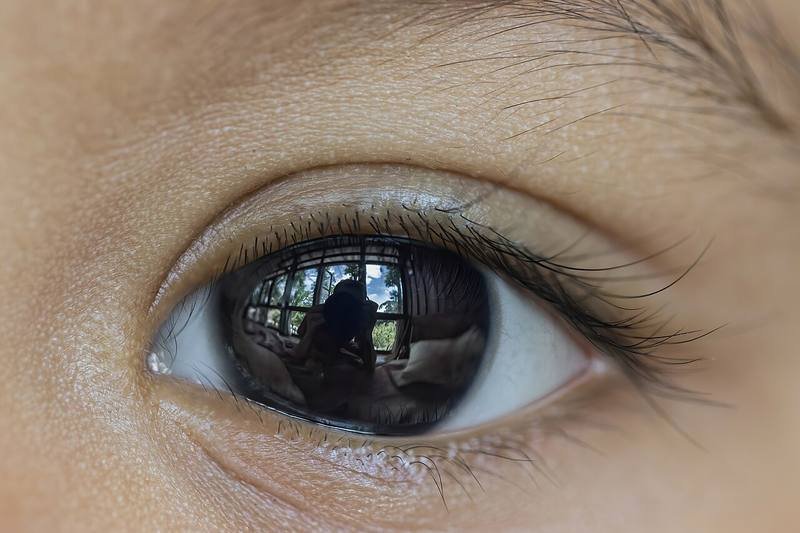
The front of the eye, the cornea, needs to stay moist and smooth to bend light properly. Tears, made by glands above the eye, supply that moisture, plus a little oil and mucus so the film does not break at once.
A blink is the eyelids sweeping that film across the cornea and washing away dust. Between blinks the film starts to thin. If it breaks, the eye stings and vision blurs until the next sweep.
A thin film of tears
Most blinks are automatic. You can hold your eyes open on purpose, but the urge grows quickly. Bright light, a puff of air, and something touching the lashes trigger a faster reflex blink, run by nerves rather than a plan.
The rate is not a fixed number for everyone. Reading, staring at a screen, and concentrating often slow it. That is one reason eyes feel dry after a long stretch at a monitor. Looking away and letting a few full blinks happen gives the film a chance to reform.
A reflex, and a choice
Tears drain through tiny puncta at the inner corner of the eyelids, into a duct that opens in the nose. That is why crying comes with a runny nose. The plumbing is shared.
Blinking is maintenance, not a message. The social habit of a wink is a separate, deliberate use of one lid.
A thin film of tears
A blink spreads tears and clears the surface of the eye. Most blinks happen without a decision. The front of the eye, the cornea, needs to stay moist and smooth to bend light properly. Tears, made by glands above the eye, supply that moisture, plus a little oil and mucus so the film does not break at once.
Put those two statements side by side. The first sets the condition. The second says what happens once that condition is met. Why we blink needs both. Drop the first and the second has nothing to explain. Drop the second and the first is only the scene.
A reflex, and a choice
Tears, made by glands above the eye, supply that moisture, plus a little oil and mucus so the film does not break at once. A blink is the eyelids sweeping that film across the cornea and washing away dust.
The order is the explanation. What the first sentence names has to be there before the result in the second sentence can show up. The piece does not ask you to accept the result first and hunt for a cause afterwards.
A check you can make
A blink is the eyelids sweeping that film across the cornea and washing away dust. Between blinks the film starts to thin.
A fair check is sequential. Confirm the first statement. Then see whether the second is the result of it, rather than a separate fact parked in the same piece. If the result shows up without the condition, this account does not cover what you are looking at.
The limit of the claim
Between blinks the film starts to thin. If it breaks, the eye stings and vision blurs until the next sweep.
The two statements do different jobs. One says what is there, what it is made of, or what acts on it. The other says the change that follows. The title names the change. It is not an inventory of parts.
The same steps, in order
If it breaks, the eye stings and vision blurs until the next sweep. Most blinks are automatic.
Nothing in the second statement cancels the first. It carries the first forward or marks the limit of it. Remember only the result, and the cause goes missing. Remember only the cause, and you will not know what the piece says happens next.
Why the order matters
Most blinks are automatic. You can hold your eyes open on purpose, but the urge grows quickly.
Read them as one path. Start at the first full stop and do not skip to the outcome. The words between the two statements are the mechanism. The title is the name of that path, not a second claim.
No correction has been appended to this story. If a line is wrong, tell the newsroom.