
Export bar placed on a Bronze Age battle-axe head from North Yorkshire
A stone battle-axe head about 4,000 years old, found near Tadcaster in 1974, has been given a temporary export bar so that a UK buyer can try to acquire it.
Listen is a Plus feature Upgrade
Listening is not supported in this browser.
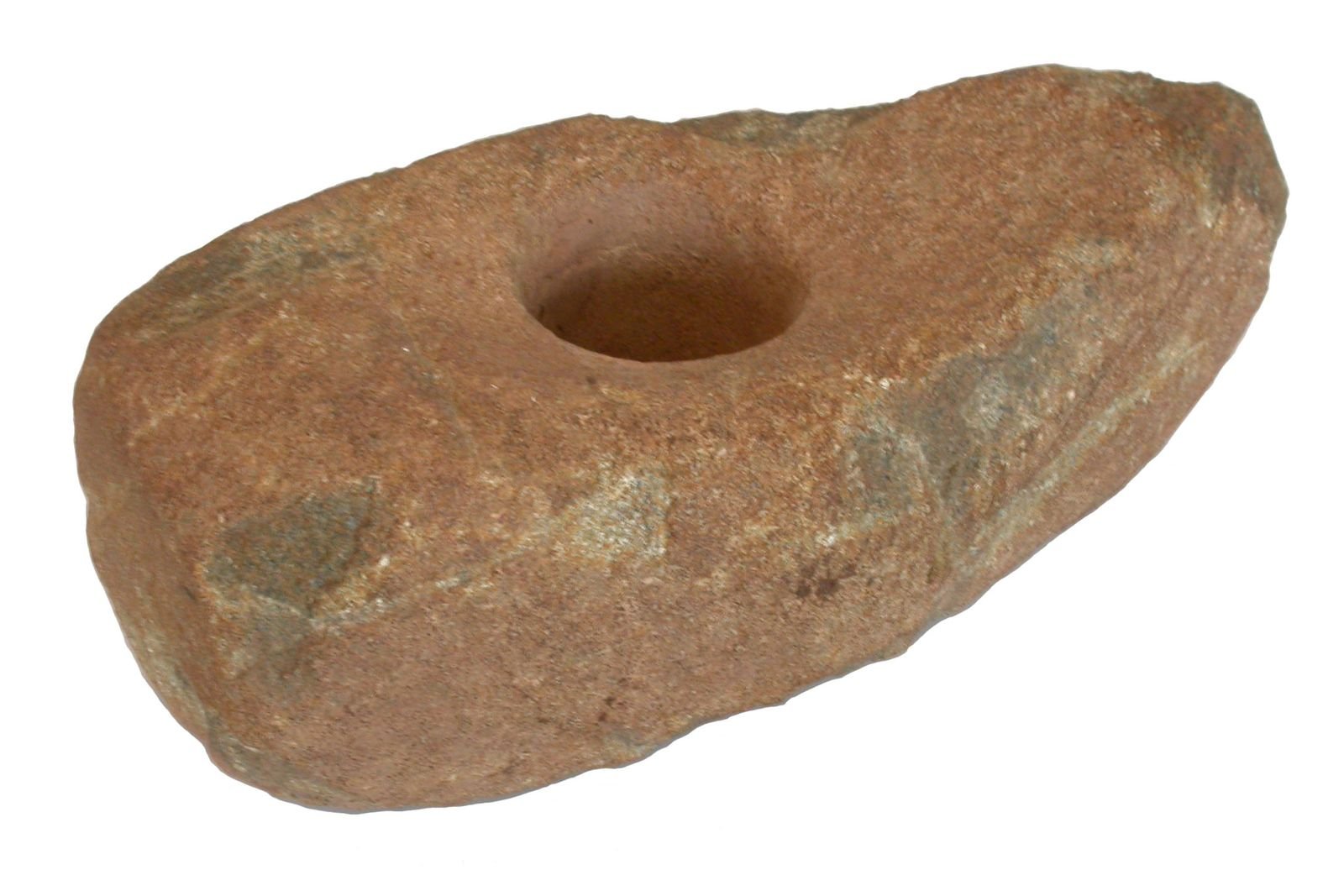
A prehistoric stone battle-axe head found in North Yorkshire has been placed under a temporary export bar, the Department for Culture, Media and Sport announced. The bar gives a UK buyer time to raise the money to keep it in the country.
The object is known as the Scarthingwell battle-axe head. It dates from the Early Bronze Age and is about 4,000 years old. It belongs to the type classed as Needham's Class 2, dated to roughly 2050 to 1850 BC.
What the object is
The head was made from a speckled stone, diorite, which has been altered by weathering. It was ground into shape, perforated and polished. It has a waisted profile, a tear-drop shape when seen from above and a shaft hole set slightly off centre.
It measures 120 millimetres long, 60 millimetres high at one end and 40 at the other, and 50 millimetres wide. It weighs 360 grams. The photograph above shows a different stone axe hammer of the same broad period, not the Scarthingwell object.
Where it was found
The head was found on the surface during farm work at Scarthingwell, near Tadcaster, in the winter of 1974. It was reported to the Portable Antiquities Scheme in 2012. The scheme records archaeological objects found by members of the public in England and Wales.
Why it was given a bar
The decision followed advice from the Reviewing Committee on the Export of Works of Art and Objects of Cultural Interest, whose work is serviced by Arts Council England. The committee tests objects against three questions, known as the Waverley criteria.
They ask whether an object is so closely connected with the country's history and national life that its departure would be a misfortune, whether it is of outstanding aesthetic importance, and whether it is of outstanding significance for the study of a branch of art, learning or history. The committee found that the battle-axe head met all three.
The timetable
The first deferral period ends on 22 December 2026. After that, the owner has 15 business days to consider any offer made at the recommended price of £15,000.
If an offer is made and an option agreement is signed, a second deferral period of three months follows. That gives the buyer time to complete the purchase. If no offer comes forward, an export licence may be granted.
How export bars work
An export bar does not confiscate an object or force a sale. It pauses the export licence so that a museum, gallery or other UK buyer has a chance to match the price. If no UK buyer matches the price, the object can leave the country once the deferral ends.
No correction has been appended to this story. If a line is wrong, tell the newsroom.