
What mileposts were for
A milepost tells you how far you are along a road, and often how far remains to the next town. It was a tool for travellers, coaches, and the charges they paid.
Listen is a Plus feature Upgrade
Listening is not supported in this browser.
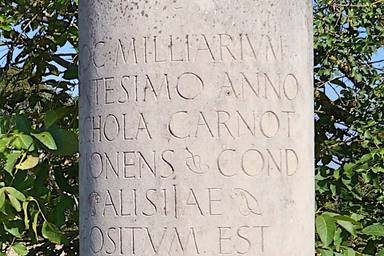
A mile is a fixed length. A milestone or milepost marks that length along a particular road, measured from a named place. Once the posts are in, a traveller can know the distance without asking, and a map can be checked against the ground.
In the coaching age the distance was also a price. Tolls and fares were charged by the mile. A post that says six miles to a market town is a claim about money as well as about geography. Parishes and turnpike trusts, the bodies that maintained many roads, were required to mark those distances.
Distance you can trust
The form varies. A stone with a carved number, a cast-iron plate on a short post, a finger pointing down a side road. The wording is local. Some give only the miles. Some name two towns, one in each direction. A few include a date, which dates the road improvement rather than the invention of the mile.
The measurement starts somewhere. Many British series are measured from a point in a city, a cross or a bridge, and the first post out of town already shows a mile or two. Finding post one is a small historical sport. The series is the useful part.
Who put them there
Modern signs have taken over the job for drivers, and GPS has taken it over again. The posts remain because they are heavy, and because a cast number does not need a battery. On a footpath that follows an old turnpike, they are still right.
If you walk, they are a check on the map. If the posts and the map disagree by a long way, one of them is using a different starting point, or the road has been realigned and the post was left behind.
Distance you can trust
A milepost tells you how far you are along a road, and often how far remains to the next town. It was a tool for travellers, coaches, and the charges they paid. A mile is a fixed length. A milestone or milepost marks that length along a particular road, measured from a named place.
Put those two statements side by side. The first sets the condition. The second says what happens once that condition is met. What mileposts were for needs both. Drop the first and the second has nothing to explain. Drop the second and the first is only the scene.
Who put them there
A milestone or milepost marks that length along a particular road, measured from a named place. Once the posts are in, a traveller can know the distance without asking, and a map can be checked against the ground.
The order is the explanation. What the first sentence names has to be there before the result in the second sentence can show up. The piece does not ask you to accept the result first and hunt for a cause afterwards.
A check you can make
Once the posts are in, a traveller can know the distance without asking, and a map can be checked against the ground. In the coaching age the distance was also a price.
A fair check is sequential. Confirm the first statement. Then see whether the second is the result of it, rather than a separate fact parked in the same piece. If the result shows up without the condition, this account does not cover what you are looking at.
The limit of the claim
In the coaching age the distance was also a price. Tolls and fares were charged by the mile.
The two statements do different jobs. One says what is there, what it is made of, or what acts on it. The other says the change that follows. The title names the change. It is not an inventory of parts.
The same steps, in order
Tolls and fares were charged by the mile. A post that says six miles to a market town is a claim about money as well as about geography.
Nothing in the second statement cancels the first. It carries the first forward or marks the limit of it. Remember only the result, and the cause goes missing. Remember only the cause, and you will not know what the piece says happens next.
Why the order matters
A post that says six miles to a market town is a claim about money as well as about geography. Parishes and turnpike trusts, the bodies that maintained many roads, were required to mark those distances.
Read them as one path. Start at the first full stop and do not skip to the outcome. The words between the two statements are the mechanism. The title is the name of that path, not a second claim.
Condition, then outcome
Parishes and turnpike trusts, the bodies that maintained many roads, were required to mark those distances. The form varies.
The first statement can be true and still not finish the job. The second statement is the job finishing. Hold both, and the paragraph above stops being a list. It becomes the reason the title is worded as it is.
What the title is naming
The form varies. A stone with a carved number, a cast-iron plate on a short post, a finger pointing down a side road.
If you wanted a shorter version, it would be those two sentences and nothing else. Everything added around them is there so the dependence is obvious: the second does not happen unless the first has happened.
What has to come first
A stone with a carved number, a cast-iron plate on a short post, a finger pointing down a side road. The wording is local.
Put those two statements side by side. The first sets the condition. The second says what happens once that condition is met. What mileposts were for needs both. Drop the first and the second has nothing to explain. Drop the second and the first is only the scene.
The result that follows
The wording is local. Some give only the miles.
The order is the explanation. What the first sentence names has to be there before the result in the second sentence can show up. The piece does not ask you to accept the result first and hunt for a cause afterwards.
A check you can make
Some give only the miles. Some name two towns, one in each direction.
A fair check is sequential. Confirm the first statement. Then see whether the second is the result of it, rather than a separate fact parked in the same piece. If the result shows up without the condition, this account does not cover what you are looking at.
The limit of the claim
Some name two towns, one in each direction. A few include a date, which dates the road improvement rather than the invention of the mile.
The two statements do different jobs. One says what is there, what it is made of, or what acts on it. The other says the change that follows. The title names the change. It is not an inventory of parts.
The same steps, in order
A few include a date, which dates the road improvement rather than the invention of the mile. The measurement starts somewhere.
Nothing in the second statement cancels the first. It carries the first forward or marks the limit of it. Remember only the result, and the cause goes missing. Remember only the cause, and you will not know what the piece says happens next.
Why the order matters
The measurement starts somewhere. Many British series are measured from a point in a city, a cross or a bridge, and the first post out of town already shows a mile or two.
Read them as one path. Start at the first full stop and do not skip to the outcome. The words between the two statements are the mechanism. The title is the name of that path, not a second claim.
Condition, then outcome
Many British series are measured from a point in a city, a cross or a bridge, and the first post out of town already shows a mile or two. Finding post one is a small historical sport.
The first statement can be true and still not finish the job. The second statement is the job finishing. Hold both, and the paragraph above stops being a list. It becomes the reason the title is worded as it is.
What the title is naming
Finding post one is a small historical sport. The series is the useful part.
If you wanted a shorter version, it would be those two sentences and nothing else. Everything added around them is there so the dependence is obvious: the second does not happen unless the first has happened.
What has to come first
The series is the useful part. Modern signs have taken over the job for drivers, and GPS has taken it over again.
Put those two statements side by side. The first sets the condition. The second says what happens once that condition is met. What mileposts were for needs both. Drop the first and the second has nothing to explain. Drop the second and the first is only the scene.
The result that follows
Modern signs have taken over the job for drivers, and GPS has taken it over again. The posts remain because they are heavy, and because a cast number does not need a battery.
The order is the explanation. What the first sentence names has to be there before the result in the second sentence can show up. The piece does not ask you to accept the result first and hunt for a cause afterwards.
No correction has been appended to this story. If a line is wrong, tell the newsroom.