
How a radiator warms a room
A radiator warms the air next to it. That air rises, cooler air comes in to take its place, and the room warms by a slow circulation.
Listen is a Plus feature Upgrade
Listening is not supported in this browser.
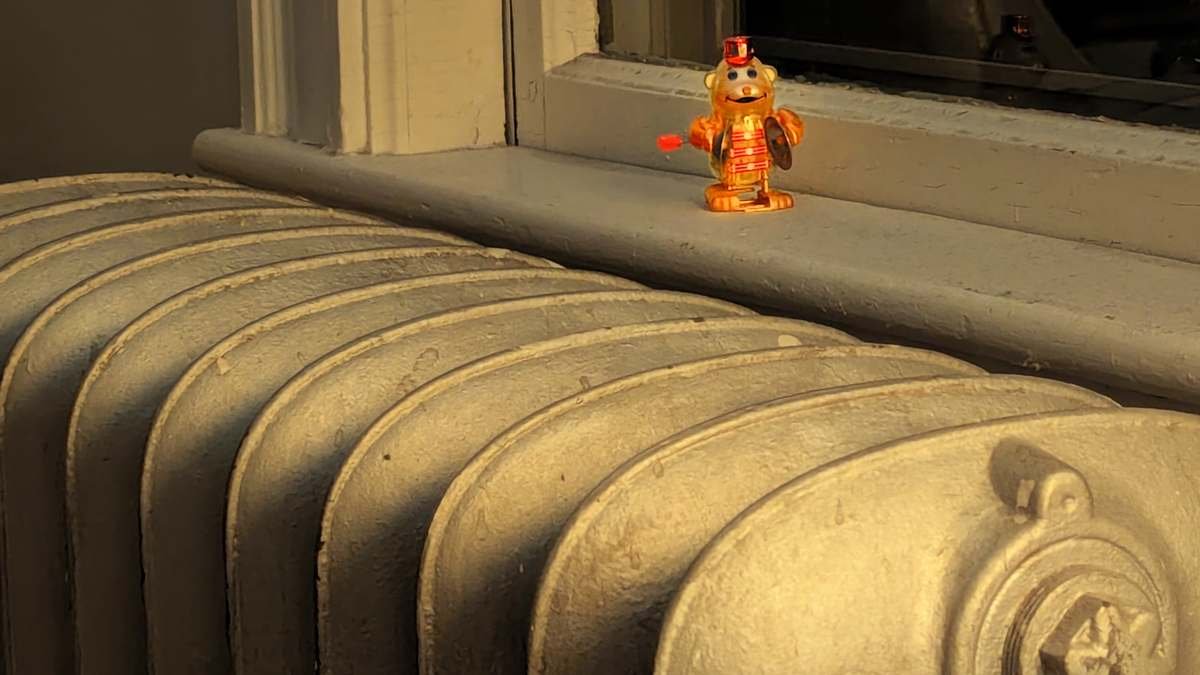
A household radiator is a metal body with hot water, or sometimes oil, inside it. The metal is warmed by that liquid. The metal then warms the air that touches it.
Air that is warmed becomes less dense, so it rises. Cooler air from the floor moves in to take its place, touches the metal, and rises in turn. The room is not heated in one blast. It is heated by this loop, called convection, for as long as the radiator stays hotter than the air.
What the boiler is doing
In a typical British house the water is heated by a boiler and pushed around a loop of pipes. The radiator is one stop on that loop. A valve lets you reduce the flow, which is why one room can run quieter than another. When the water has given up some of its heat, it goes back to the boiler to be heated again.
The radiator itself is not a fire. It does not burn anything in the room. If the boiler burns gas or oil, that burning happens at the boiler. An electric panel is different: a heater inside the metal warms it directly, and there is no water circuit. The air still rises in the same way.
Where to put it
Warm air rises, so a radiator low on the wall is in a useful place. It heats the coolest air first, the air near the floor. A shelf tight above it, or a long curtain dropped in front of it, slows the loop. The metal can be hot while the middle of the room stays cool, because the warm air is trapped against the wall.
A hot surface also sends some heat straight out, the way a stove warms your face without touching you. On an ordinary panel radiator most of the useful work is still the moving air. That is why blocking the airflow matters more than the colour of the paint, and why the name “radiator” only tells half the story.
Why it ticks, then cools
Metal grows a little as it heats and shrinks as it cools. The ticks at the start and end of a heating period are the panels and the brackets easing. They are not, by themselves, a sign that water is escaping. A damp patch under a valve is a different matter: that means a joint is wet.
Once the boiler stops calling for heat, the water in the radiator cools and the rising current fades. The room then loses warmth through the walls, the glass, and any draught. The radiator did not store the evening. It only kept the loop going while it was hot.
No correction has been appended to this story. If a line is wrong, tell the newsroom.