
How Velcro grips
Hook-and-loop tape grips because hundreds of tiny hooks catch in a mat of loops. Pulling peels them off again.
Listen is a Plus feature Upgrade
Listening is not supported in this browser.
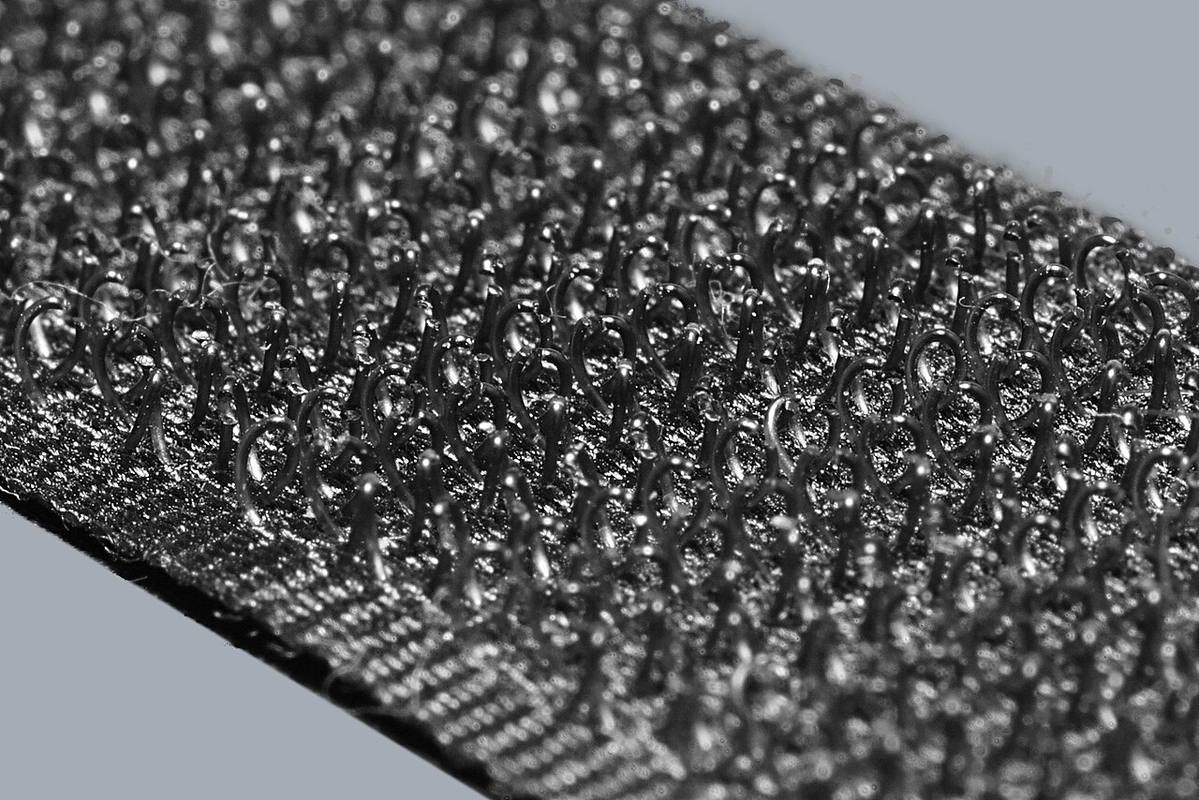
The fastening sold as Velcro is a pair of tapes. One tape carries a dense field of tiny hooks. The other carries a dense field of soft loops. Press them together and hooks snag loops.
Each hook is weak. The strength comes from the number. A few square centimetres contain hundreds of catches, and you have to release many of them at once to pull the tapes straight apart.
Hooks and loops
Peeling from a corner is easier than pulling face to face. A peel releases one row of hooks at a time. That is why a tab at the end of a strap makes the fastening practical to open.
The idea was copied from burs, the seed heads that snag on animal fur and on clothing. The hooks on a bur are a way for the plant to hitch a ride. The tape uses the same catch, arranged on purpose.
Why it wears out
After many openings, hooks straighten and loops tear. The tapes still look fuzzy, but fewer catches remain, so the grip fades. Heat can also soften the plastic hooks and flatten them.
The tapes do not stick like glue. Dust, hair, and lint sit in the hooks and take the place of loops. A quick brush or a press of the hook side against a spare piece of loop tape clears some of that debris.
Hooks and loops
Hook-and-loop tape grips because hundreds of tiny hooks catch in a mat of loops. Pulling peels them off again. The fastening sold as Velcro is a pair of tapes. One tape carries a dense field of tiny hooks.
Put those two statements side by side. The first sets the condition. The second says what happens once that condition is met. How Velcro grips needs both. Drop the first and the second has nothing to explain. Drop the second and the first is only the scene.
Why it wears out
One tape carries a dense field of tiny hooks. The other carries a dense field of soft loops.
The order is the explanation. What the first sentence names has to be there before the result in the second sentence can show up. The piece does not ask you to accept the result first and hunt for a cause afterwards.
A check you can make
The other carries a dense field of soft loops. Press them together and hooks snag loops.
A fair check is sequential. Confirm the first statement. Then see whether the second is the result of it, rather than a separate fact parked in the same piece. If the result shows up without the condition, this account does not cover what you are looking at.
The limit of the claim
Press them together and hooks snag loops. Each hook is weak.
The two statements do different jobs. One says what is there, what it is made of, or what acts on it. The other says the change that follows. The title names the change. It is not an inventory of parts.
The same steps, in order
Each hook is weak. The strength comes from the number.
Nothing in the second statement cancels the first. It carries the first forward or marks the limit of it. Remember only the result, and the cause goes missing. Remember only the cause, and you will not know what the piece says happens next.
Why the order matters
The strength comes from the number. A few square centimetres contain hundreds of catches, and you have to release many of them at once to pull the tapes straight apart.
Read them as one path. Start at the first full stop and do not skip to the outcome. The words between the two statements are the mechanism. The title is the name of that path, not a second claim.
Condition, then outcome
A few square centimetres contain hundreds of catches, and you have to release many of them at once to pull the tapes straight apart. Peeling from a corner is easier than pulling face to face.
The first statement can be true and still not finish the job. The second statement is the job finishing. Hold both, and the paragraph above stops being a list. It becomes the reason the title is worded as it is.
No correction has been appended to this story. If a line is wrong, tell the newsroom.