
Why a knot holds
A knot holds because the rope presses on itself. Friction in the bends stops the end sliding back through.
Listen is a Plus feature Upgrade
Listening is not supported in this browser.
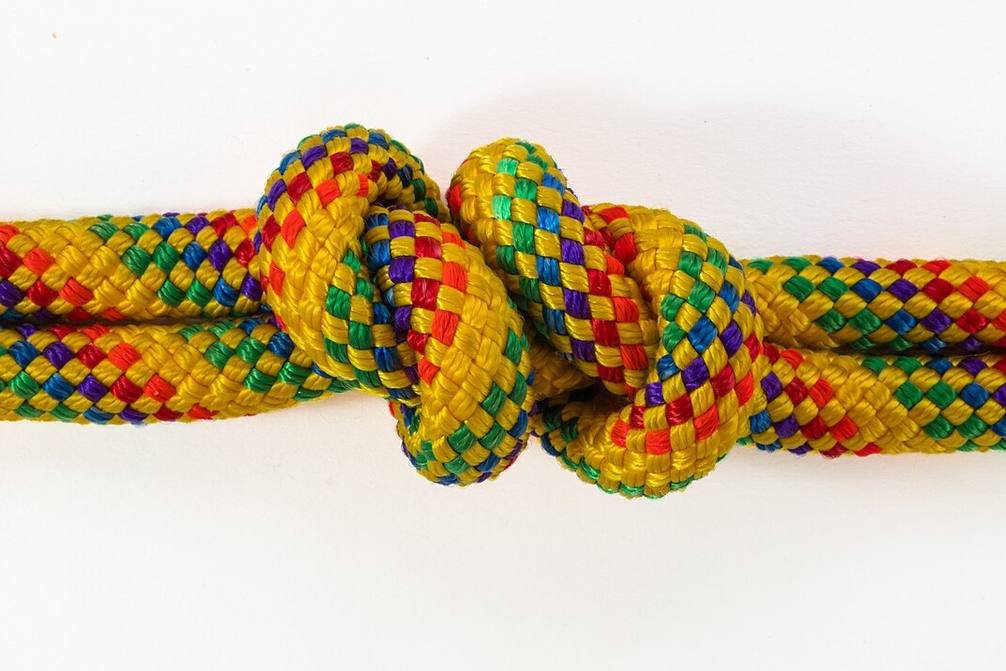
Rope is not sticky. A straight piece slides through your hands. A knot makes the rope change direction so that one part bears down on another.
Each bend adds friction. The tighter the standing part is pulled, the harder it presses on the turns underneath. That pressure is what stops the free end crawling back out.
Friction in the bends
A reef knot binds two ends of similar rope for a bundle. It is two half knots in opposite directions. Pull the standing parts and the knot nips. Pull the ends the wrong way and it can capsize and slip, which is why it is a poor knot for a life-critical join.
A bowline makes a fixed loop. The end is locked inside a turn of the standing part. Load the loop and the turn tightens on the end. Unload it and you can often work it loose, which is why sailors use it when they want a loop that will still untie.
Why some knots slip
The material matters. A smooth synthetic rope has less friction than a hairy natural fibre, so it needs a knot with more turns. A figure-of-eight follow-through adds those extra bends.
No knot makes rope stronger. Every sharp bend weakens the fibres a little. The knot is a compromise: enough friction to hold, and a shape you can still untie.
Friction in the bends
A knot holds because the rope presses on itself. Friction in the bends stops the end sliding back through. Rope is not sticky. A straight piece slides through your hands.
Put those two statements side by side. The first sets the condition. The second says what happens once that condition is met. Why a knot holds needs both. Drop the first and the second has nothing to explain. Drop the second and the first is only the scene.
Why some knots slip
A straight piece slides through your hands. A knot makes the rope change direction so that one part bears down on another.
The order is the explanation. What the first sentence names has to be there before the result in the second sentence can show up. The piece does not ask you to accept the result first and hunt for a cause afterwards.
A check you can make
A knot makes the rope change direction so that one part bears down on another. Each bend adds friction.
A fair check is sequential. Confirm the first statement. Then see whether the second is the result of it, rather than a separate fact parked in the same piece. If the result shows up without the condition, this account does not cover what you are looking at.
The limit of the claim
Each bend adds friction. The tighter the standing part is pulled, the harder it presses on the turns underneath.
The two statements do different jobs. One says what is there, what it is made of, or what acts on it. The other says the change that follows. The title names the change. It is not an inventory of parts.
The same steps, in order
The tighter the standing part is pulled, the harder it presses on the turns underneath. That pressure is what stops the free end crawling back out.
Nothing in the second statement cancels the first. It carries the first forward or marks the limit of it. Remember only the result, and the cause goes missing. Remember only the cause, and you will not know what the piece says happens next.
Why the order matters
That pressure is what stops the free end crawling back out. A reef knot binds two ends of similar rope for a bundle.
Read them as one path. Start at the first full stop and do not skip to the outcome. The words between the two statements are the mechanism. The title is the name of that path, not a second claim.
Condition, then outcome
A reef knot binds two ends of similar rope for a bundle. It is two half knots in opposite directions.
The first statement can be true and still not finish the job. The second statement is the job finishing. Hold both, and the paragraph above stops being a list. It becomes the reason the title is worded as it is.
No correction has been appended to this story. If a line is wrong, tell the newsroom.