
How coins are minted
A coin starts as a blank disc of metal. A press strikes it between two dies, and the design is raised in a moment.
Listen is a Plus feature Upgrade
Listening is not supported in this browser.
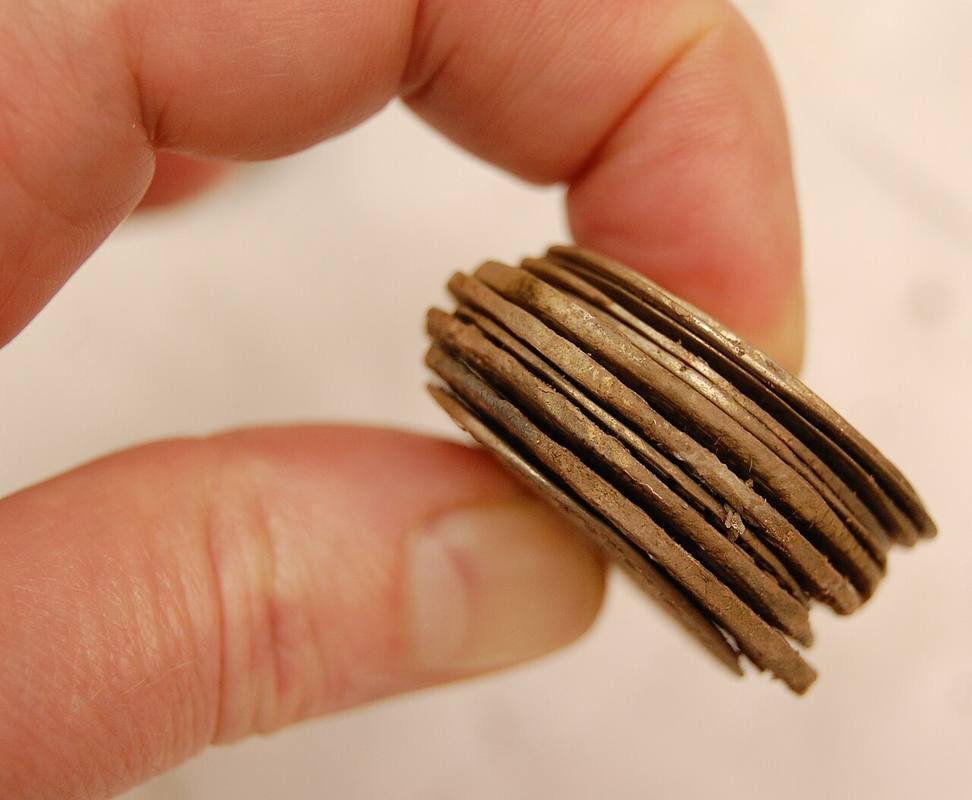
The metal is an alloy, chosen for durability and for a colour: a gold-coloured alloy, a silver-coloured one, or a ring of one metal around a core of another. It is rolled into sheet and punched into blanks. A blank is a coin with no face.
The blanks are annealed, which softens the metal, and cleaned. A soft blank takes a design. A hard one would crack the die or come out faint. After the strike they are hard enough for a pocket.
Blanks and dies
Each die is a steel tool with the design cut into it, in reverse. One die sits in the bottom of the press, one in the top. The blank goes between them. A single heavy strike squeezes the metal into the cuts, and the design stands up in relief. The squeeze is why the design is slightly raised and the background slightly lower.
The edge is done at the same time, or just before, by a collar around the blank. Milling, the fine grooves, and any letters on the edge are there to show tampering and to help people tell coins apart by touch. A plain edge is a choice, not an unfinished coin.
Edges and checks
Presses run fast, and every coin is checked. Weight, size, and the look of the strike are sampled. A blank that was wrong, or a die that has worn, is how a mint ends up with a coin it will not issue. The ones that pass are counted and bagged for the banks.
A coin’s value in everyday use is the value the state gives it, which can be more than the metal would fetch as scrap, or, for a few old coins, less. The strike is what makes the disc a coin rather than a washer.
Blanks and dies
A coin starts as a blank disc of metal. A press strikes it between two dies, and the design is raised in a moment. The metal is an alloy, chosen for durability and for a colour: a gold-coloured alloy, a silver-coloured one, or a ring of one metal around a core of another. It is rolled into sheet and punched into blanks.
Put those two statements side by side. The first sets the condition. The second says what happens once that condition is met. How coins are minted needs both. Drop the first and the second has nothing to explain. Drop the second and the first is only the scene.
Edges and checks
It is rolled into sheet and punched into blanks. A blank is a coin with no face.
The order is the explanation. What the first sentence names has to be there before the result in the second sentence can show up. The piece does not ask you to accept the result first and hunt for a cause afterwards.
A check you can make
A blank is a coin with no face. The blanks are annealed, which softens the metal, and cleaned.
A fair check is sequential. Confirm the first statement. Then see whether the second is the result of it, rather than a separate fact parked in the same piece. If the result shows up without the condition, this account does not cover what you are looking at.
The limit of the claim
The blanks are annealed, which softens the metal, and cleaned. A soft blank takes a design.
The two statements do different jobs. One says what is there, what it is made of, or what acts on it. The other says the change that follows. The title names the change. It is not an inventory of parts.
The same steps, in order
A soft blank takes a design. A hard one would crack the die or come out faint.
Nothing in the second statement cancels the first. It carries the first forward or marks the limit of it. Remember only the result, and the cause goes missing. Remember only the cause, and you will not know what the piece says happens next.
Why the order matters
A hard one would crack the die or come out faint. After the strike they are hard enough for a pocket.
Read them as one path. Start at the first full stop and do not skip to the outcome. The words between the two statements are the mechanism. The title is the name of that path, not a second claim.
Condition, then outcome
After the strike they are hard enough for a pocket. Each die is a steel tool with the design cut into it, in reverse.
The first statement can be true and still not finish the job. The second statement is the job finishing. Hold both, and the paragraph above stops being a list. It becomes the reason the title is worded as it is.
What the title is naming
Each die is a steel tool with the design cut into it, in reverse. One die sits in the bottom of the press, one in the top.
If you wanted a shorter version, it would be those two sentences and nothing else. Everything added around them is there so the dependence is obvious: the second does not happen unless the first has happened.
What has to come first
One die sits in the bottom of the press, one in the top. The blank goes between them.
Put those two statements side by side. The first sets the condition. The second says what happens once that condition is met. How coins are minted needs both. Drop the first and the second has nothing to explain. Drop the second and the first is only the scene.
The result that follows
The blank goes between them. A single heavy strike squeezes the metal into the cuts, and the design stands up in relief.
The order is the explanation. What the first sentence names has to be there before the result in the second sentence can show up. The piece does not ask you to accept the result first and hunt for a cause afterwards.
A check you can make
A single heavy strike squeezes the metal into the cuts, and the design stands up in relief. The squeeze is why the design is slightly raised and the background slightly lower.
A fair check is sequential. Confirm the first statement. Then see whether the second is the result of it, rather than a separate fact parked in the same piece. If the result shows up without the condition, this account does not cover what you are looking at.
The limit of the claim
The squeeze is why the design is slightly raised and the background slightly lower. The edge is done at the same time, or just before, by a collar around the blank.
The two statements do different jobs. One says what is there, what it is made of, or what acts on it. The other says the change that follows. The title names the change. It is not an inventory of parts.
The same steps, in order
The edge is done at the same time, or just before, by a collar around the blank. Milling, the fine grooves, and any letters on the edge are there to show tampering and to help people tell coins apart by touch.
Nothing in the second statement cancels the first. It carries the first forward or marks the limit of it. Remember only the result, and the cause goes missing. Remember only the cause, and you will not know what the piece says happens next.
Why the order matters
Milling, the fine grooves, and any letters on the edge are there to show tampering and to help people tell coins apart by touch. A plain edge is a choice, not an unfinished coin.
Read them as one path. Start at the first full stop and do not skip to the outcome. The words between the two statements are the mechanism. The title is the name of that path, not a second claim.
Condition, then outcome
A plain edge is a choice, not an unfinished coin. Presses run fast, and every coin is checked.
The first statement can be true and still not finish the job. The second statement is the job finishing. Hold both, and the paragraph above stops being a list. It becomes the reason the title is worded as it is.
What the title is naming
Presses run fast, and every coin is checked. Weight, size, and the look of the strike are sampled.
If you wanted a shorter version, it would be those two sentences and nothing else. Everything added around them is there so the dependence is obvious: the second does not happen unless the first has happened.
What has to come first
Weight, size, and the look of the strike are sampled. A blank that was wrong, or a die that has worn, is how a mint ends up with a coin it will not issue.
Put those two statements side by side. The first sets the condition. The second says what happens once that condition is met. How coins are minted needs both. Drop the first and the second has nothing to explain. Drop the second and the first is only the scene.
The result that follows
A blank that was wrong, or a die that has worn, is how a mint ends up with a coin it will not issue. The ones that pass are counted and bagged for the banks.
The order is the explanation. What the first sentence names has to be there before the result in the second sentence can show up. The piece does not ask you to accept the result first and hunt for a cause afterwards.
A check you can make
The ones that pass are counted and bagged for the banks. A coin’s value in everyday use is the value the state gives it, which can be more than the metal would fetch as scrap, or, for a few old coins, less.
A fair check is sequential. Confirm the first statement. Then see whether the second is the result of it, rather than a separate fact parked in the same piece. If the result shows up without the condition, this account does not cover what you are looking at.
The limit of the claim
A coin’s value in everyday use is the value the state gives it, which can be more than the metal would fetch as scrap, or, for a few old coins, less. The strike is what makes the disc a coin rather than a washer.
The two statements do different jobs. One says what is there, what it is made of, or what acts on it. The other says the change that follows. The title names the change. It is not an inventory of parts.
No correction has been appended to this story. If a line is wrong, tell the newsroom.