
How a mushroom feeds
A mushroom is the fruit of a fungus. The feeding part is a network of threads in the soil, wood, or leaf litter.
Listen is a Plus feature Upgrade
Listening is not supported in this browser.
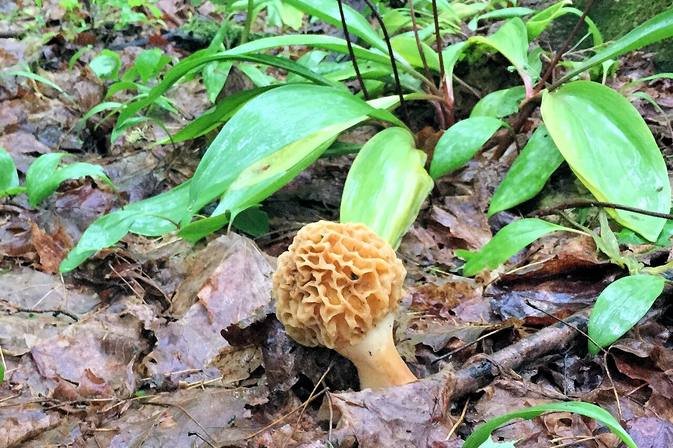
What we call a mushroom is only the part that appears above ground. Underneath, the fungus lives as mycelium, a web of fine threads called hyphae. Those threads are the body.
Fungi do not make food from sunlight the way green plants do. They have no chlorophyll. They release enzymes into the material around them and absorb the broken-down nutrients through the hyphae.
Threads in the soil
Some fungi rot dead wood and leaves. They are decomposers, returning carbon and minerals to the soil. Others join living tree roots in a partnership: the fungus gathers minerals and water, and the tree shares sugars.
A few fungi feed on living tissue as parasites. The feeding style is still the same. Enzymes go out, dissolved food comes in. Only the host differs.
Why the cap appears
When the mycelium has stored enough food and the conditions are damp, it builds a fruiting body. The cap and stem lift the spore-bearing surface into the air. Gills or pores under the cap produce spores.
Spores drift away and can start a new mycelium if they land somewhere suitable. The cap is temporary. The threads in the ground may live for years, feeding the whole time.
Threads in the soil
A mushroom is the fruit of a fungus. The feeding part is a network of threads in the soil, wood, or leaf litter. What we call a mushroom is only the part that appears above ground. Underneath, the fungus lives as mycelium, a web of fine threads called hyphae.
Put those two statements side by side. The first sets the condition. The second says what happens once that condition is met. How a mushroom feeds needs both. Drop the first and the second has nothing to explain. Drop the second and the first is only the scene.
Why the cap appears
Underneath, the fungus lives as mycelium, a web of fine threads called hyphae. Those threads are the body.
The order is the explanation. What the first sentence names has to be there before the result in the second sentence can show up. The piece does not ask you to accept the result first and hunt for a cause afterwards.
A check you can make
Those threads are the body. Fungi do not make food from sunlight the way green plants do.
A fair check is sequential. Confirm the first statement. Then see whether the second is the result of it, rather than a separate fact parked in the same piece. If the result shows up without the condition, this account does not cover what you are looking at.
The limit of the claim
Fungi do not make food from sunlight the way green plants do. They have no chlorophyll.
The two statements do different jobs. One says what is there, what it is made of, or what acts on it. The other says the change that follows. The title names the change. It is not an inventory of parts.
No correction has been appended to this story. If a line is wrong, tell the newsroom.