
How a spider spins a web
A spider draws silk from spinnerets and lays it into a frame, then a spiral. Different strands do different jobs.
Listen is a Plus feature Upgrade
Listening is not supported in this browser.
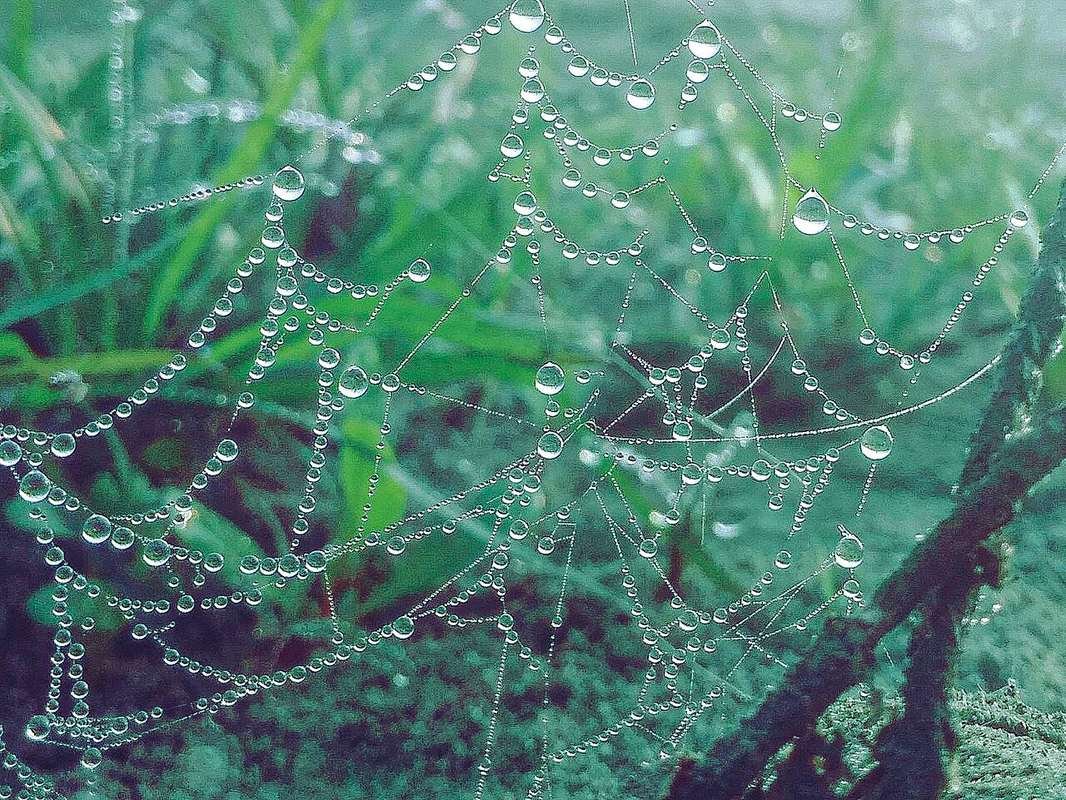
Spider silk is a protein. It is stored as a liquid in glands inside the abdomen and becomes a solid fibre as the spider pulls it out through nozzles called spinnerets. The pulling aligns the molecules.
An orb-web spider starts with a bridge line, often by letting a strand drift on the air until it catches. It then builds a frame and a set of spokes, like wheel spokes, that meet near the middle.
Silk from the spinnerets
The spokes and frame are made of strong, less sticky silk. They hold the shape. The spider can walk on them without becoming trapped.
Across those spokes the spider lays a spiral. The catching spiral uses a different silk, coated with glue droplets. Those droplets are what hold a flying insect long enough for the spider to reach it.
The finished orb
The spider does not see the whole plan from outside. It keeps contact with the strands already laid and measures the next attachment with its legs. The pattern is regular because the method is regular.
Webs are recycled. Many spiders eat the old silk, recovering the protein, and spin a fresh web. The strength of the fibre for its thickness is remarkable, but the web itself is a temporary trap.
Silk from the spinnerets
A spider draws silk from spinnerets and lays it into a frame, then a spiral. Different strands do different jobs. Spider silk is a protein. It is stored as a liquid in glands inside the abdomen and becomes a solid fibre as the spider pulls it out through nozzles called spinnerets.
Put those two statements side by side. The first sets the condition. The second says what happens once that condition is met. How a spider spins a web needs both. Drop the first and the second has nothing to explain. Drop the second and the first is only the scene.
The finished orb
It is stored as a liquid in glands inside the abdomen and becomes a solid fibre as the spider pulls it out through nozzles called spinnerets. The pulling aligns the molecules.
The order is the explanation. What the first sentence names has to be there before the result in the second sentence can show up. The piece does not ask you to accept the result first and hunt for a cause afterwards.
A check you can make
The pulling aligns the molecules. An orb-web spider starts with a bridge line, often by letting a strand drift on the air until it catches.
A fair check is sequential. Confirm the first statement. Then see whether the second is the result of it, rather than a separate fact parked in the same piece. If the result shows up without the condition, this account does not cover what you are looking at.
No correction has been appended to this story. If a line is wrong, tell the newsroom.