
How lichen grows on stone
Lichen is not one plant. A fungus and a partner that can use sunlight live together on stone, bark, or a wall.
Listen is a Plus feature Upgrade
Listening is not supported in this browser.
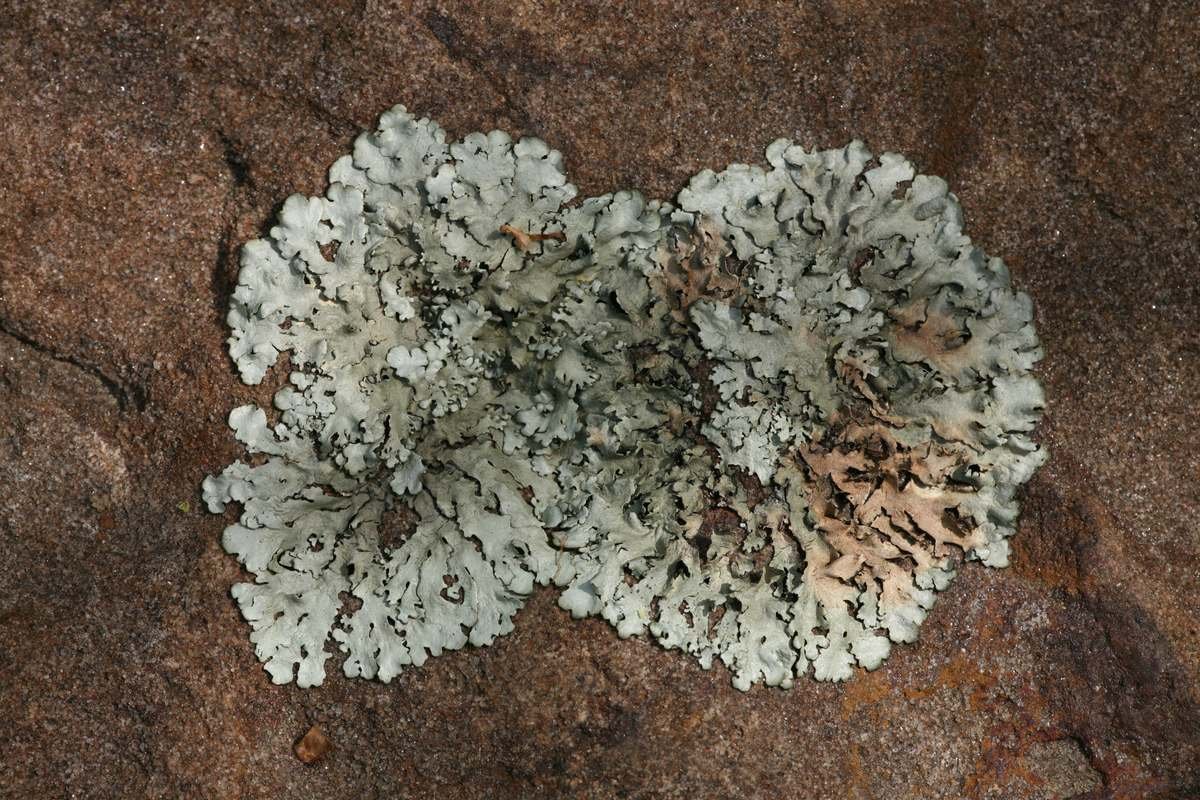
The grey, yellow, or green crust on a stone is often a lichen. It is easy to mistake for moss, or for a stain the rock made by itself. It is neither.
A lichen is a partnership. The main body is a fungus. Inside it, or just under the surface, live tiny algae, or sometimes cyanobacteria. Those partners can use sunlight to make sugars. The fungus takes a share of the sugar. In return it holds water, shields the partners from drying out, and grips the stone.
How it holds on
Lichen does not have roots. It does not drink from soil the way a tree does. Threads of the fungus fasten to the surface, and the crust soaks up rain, dew, and the damp in the air. When the weather is dry the lichen pauses. A dry week does not finish it. It waits, then carries on after rain.
Growth is slow. A patch that looks as if it appeared over one winter may have been spreading for years. On a roof or a gravestone you can sometimes see it moving out from a point, a little wider each season. It is not eating the stone the way a caterpillar eats a leaf. Some lichens do loosen grains of rock as they expand, and weak acids from the fungus meet the mineral, which is why an old monument can look pitted under a heavy crust.
Moss is a different thing
Moss is a plant. It has small leaves, and it stays green in a way a lichen often does not. Lichen has no leaves. Its colour comes from the fungus and from the partner inside, and it may be orange, grey, black, or a flat green. Both can share a wall. They are not two ages of the same organism.
Wind, birds, and insects move fragments. A flake that breaks off can start a new patch if it lands where light and moisture suit it. That is the usual spread. You do not plant it, and you cannot hurry it the way you hurry a lawn. Many lichens thin out where the air is sooty, which is why a return of lichen on city stone gets noticed.
Living on almost nothing
Stone offers almost no food. The lichen’s meal is the light, caught by the partner, plus whatever the rain carries and the surface will give up. That is why the same kind of crust appears on a mountain boulder, a roof tile, a sea wall, and the bark of a tree. The support changes. The arrangement does not.
Scrape a lichen off and you have removed a living partnership, not dirt. Left alone, it keeps its slow pace: dry, wet, dry, wet, a little wider than the year before.
No correction has been appended to this story. If a line is wrong, tell the newsroom.