
How owls fly quietly
An owl’s wing is built to soften the sound of air. That quiet flight helps it hunt by hearing.
Listen is a Plus feature Upgrade
Listening is not supported in this browser.
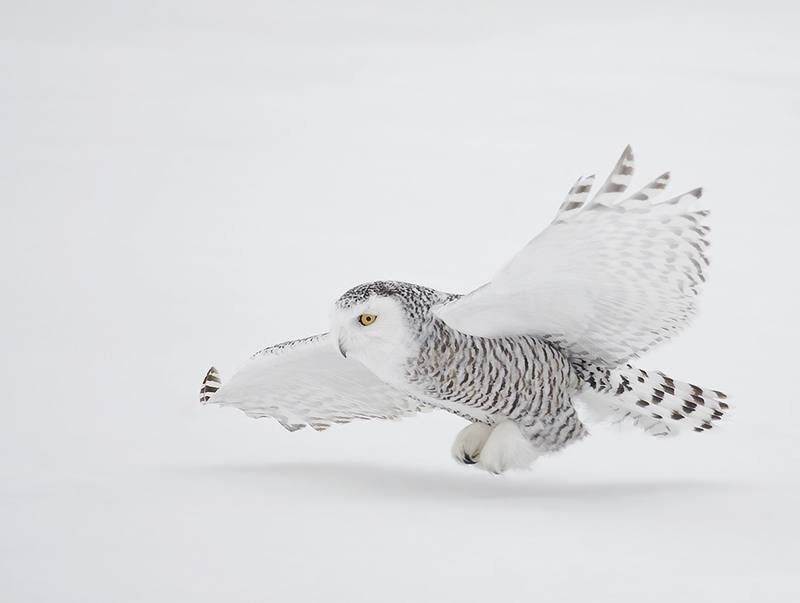
Most birds make a rush of air as they flap. Many owls do not. The front edge of an owl’s flight feather carries a comb of fine barbs that breaks the air into smaller streams, which cuts the noise.
The trailing edge of the wing is soft and frayed rather than stiff. A hard edge would shed noisy vortices. The soft edge lets the air leave more gently. Downy surfaces on the wing also muffle sound.
A soft leading edge
Quiet flight matters because owls often hunt at dusk or night, when prey is listening. A vole in grass can hear a noisy wing. A barn owl can glide in close before the strike.
The face of a barn owl is a dish of stiff feathers. It helps channel sound to the ears. In several owl species the ears sit at slightly different heights, which helps the bird judge whether a sound is above or below.
Hunting by ear
Owls can turn their heads a long way because they have extra neck bones and a blood supply arranged to cope with the twist. They are not turning a full circle, but the turn is far greater than a human neck allows.
Not every owl is a specialist night hunter. Some, such as the short-eared owl, are often seen in daylight over open ground. The quiet wing is still part of the same family design.
A soft leading edge
An owl’s wing is built to soften the sound of air. That quiet flight helps it hunt by hearing. Most birds make a rush of air as they flap. Many owls do not.
Put those two statements side by side. The first sets the condition. The second says what happens once that condition is met. How owls fly quietly needs both. Drop the first and the second has nothing to explain. Drop the second and the first is only the scene.
Hunting by ear
Many owls do not. The front edge of an owl’s flight feather carries a comb of fine barbs that breaks the air into smaller streams, which cuts the noise.
The order is the explanation. What the first sentence names has to be there before the result in the second sentence can show up. The piece does not ask you to accept the result first and hunt for a cause afterwards.
A check you can make
The front edge of an owl’s flight feather carries a comb of fine barbs that breaks the air into smaller streams, which cuts the noise. The trailing edge of the wing is soft and frayed rather than stiff.
A fair check is sequential. Confirm the first statement. Then see whether the second is the result of it, rather than a separate fact parked in the same piece. If the result shows up without the condition, this account does not cover what you are looking at.
The limit of the claim
The trailing edge of the wing is soft and frayed rather than stiff. A hard edge would shed noisy vortices.
The two statements do different jobs. One says what is there, what it is made of, or what acts on it. The other says the change that follows. The title names the change. It is not an inventory of parts.
The same steps, in order
A hard edge would shed noisy vortices. The soft edge lets the air leave more gently.
Nothing in the second statement cancels the first. It carries the first forward or marks the limit of it. Remember only the result, and the cause goes missing. Remember only the cause, and you will not know what the piece says happens next.
Why the order matters
The soft edge lets the air leave more gently. Downy surfaces on the wing also muffle sound.
Read them as one path. Start at the first full stop and do not skip to the outcome. The words between the two statements are the mechanism. The title is the name of that path, not a second claim.
Condition, then outcome
Downy surfaces on the wing also muffle sound. Quiet flight matters because owls often hunt at dusk or night, when prey is listening.
The first statement can be true and still not finish the job. The second statement is the job finishing. Hold both, and the paragraph above stops being a list. It becomes the reason the title is worded as it is.
What the title is naming
Quiet flight matters because owls often hunt at dusk or night, when prey is listening. A vole in grass can hear a noisy wing.
If you wanted a shorter version, it would be those two sentences and nothing else. Everything added around them is there so the dependence is obvious: the second does not happen unless the first has happened.
What has to come first
A vole in grass can hear a noisy wing. A barn owl can glide in close before the strike.
Put those two statements side by side. The first sets the condition. The second says what happens once that condition is met. How owls fly quietly needs both. Drop the first and the second has nothing to explain. Drop the second and the first is only the scene.
The result that follows
A barn owl can glide in close before the strike. The face of a barn owl is a dish of stiff feathers.
The order is the explanation. What the first sentence names has to be there before the result in the second sentence can show up. The piece does not ask you to accept the result first and hunt for a cause afterwards.
No correction has been appended to this story. If a line is wrong, tell the newsroom.