
How a rainbow is made
A rainbow is sunlight bent by raindrops. The colours are already in the light. The drops sort them.
Listen is a Plus feature Upgrade
Listening is not supported in this browser.
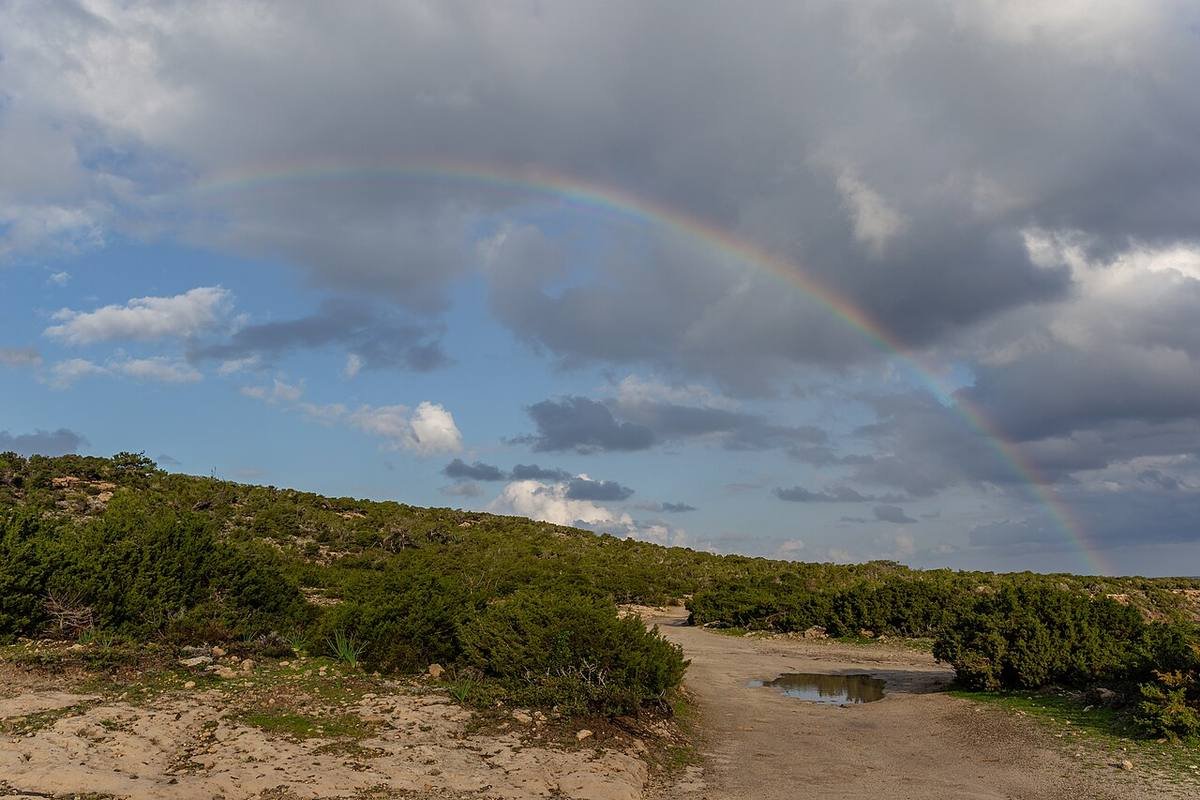
To see a rainbow you need the sun behind you and rain in front of you. Each drop of water acts as a tiny prism and a tiny mirror.
Light enters the drop and slows down, which bends its path. Different colours bend by slightly different amounts. Inside the drop, some of the light reflects off the back wall and comes out again, bent a second time.
Inside a raindrop
Because each colour leaves at a slightly different angle, the drops send red light to your eye from one part of the sky and violet from another. The bow is an arc of those angles, centred on the point opposite the sun.
You and a person standing nearby are not seeing the same drops. Each observer has a rainbow made from the drops on their own line of sight. Walk towards it and it moves with you.
Where to stand
A second, fainter bow sometimes sits outside the first. That light has bounced twice inside the drop, which reverses the order of the colours. The sky between the two bows often looks darker.
A garden hose, with the sun behind you, can make a small bow for the same reason. Mist, spray from a waterfall, and rain all work. Without drops in the air, there is nothing to sort the light.
Inside a raindrop
A rainbow is sunlight bent by raindrops. The colours are already in the light. The drops sort them. To see a rainbow you need the sun behind you and rain in front of you. Each drop of water acts as a tiny prism and a tiny mirror.
Put those two statements side by side. The first sets the condition. The second says what happens once that condition is met. How a rainbow is made needs both. Drop the first and the second has nothing to explain. Drop the second and the first is only the scene.
Where to stand
Each drop of water acts as a tiny prism and a tiny mirror. Light enters the drop and slows down, which bends its path.
The order is the explanation. What the first sentence names has to be there before the result in the second sentence can show up. The piece does not ask you to accept the result first and hunt for a cause afterwards.
A check you can make
Light enters the drop and slows down, which bends its path. Different colours bend by slightly different amounts.
A fair check is sequential. Confirm the first statement. Then see whether the second is the result of it, rather than a separate fact parked in the same piece. If the result shows up without the condition, this account does not cover what you are looking at.
The limit of the claim
Different colours bend by slightly different amounts. Inside the drop, some of the light reflects off the back wall and comes out again, bent a second time.
The two statements do different jobs. One says what is there, what it is made of, or what acts on it. The other says the change that follows. The title names the change. It is not an inventory of parts.
The same steps, in order
Inside the drop, some of the light reflects off the back wall and comes out again, bent a second time. Because each colour leaves at a slightly different angle, the drops send red light to your eye from one part of the sky and violet from another.
Nothing in the second statement cancels the first. It carries the first forward or marks the limit of it. Remember only the result, and the cause goes missing. Remember only the cause, and you will not know what the piece says happens next.
Why the order matters
Because each colour leaves at a slightly different angle, the drops send red light to your eye from one part of the sky and violet from another. The bow is an arc of those angles, centred on the point opposite the sun.
Read them as one path. Start at the first full stop and do not skip to the outcome. The words between the two statements are the mechanism. The title is the name of that path, not a second claim.
No correction has been appended to this story. If a line is wrong, tell the newsroom.