
How a river shapes its valley
A river cuts down, carries sediment, and drops it again. The valley you see is that work, added up.
Listen is a Plus feature Upgrade
Listening is not supported in this browser.
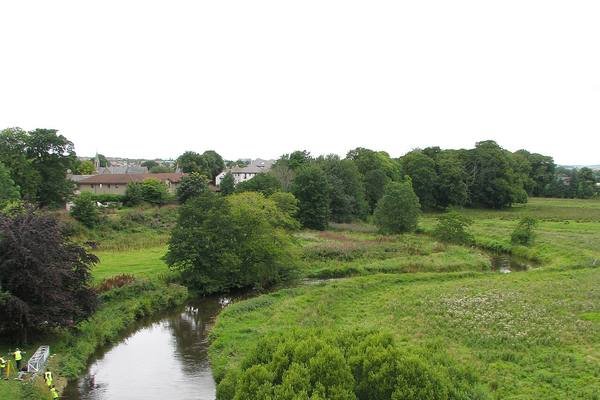
Rain and springs gather into a channel. Even a small stream can move grains of sand if the flow is fast enough. Speed depends on the slope and on how much water is in the channel.
In the hills, where the slope is steep, a river has more power to erode. It picks up gravel and uses that gravel as tools, knocking more material off the bed and banks. Over time the channel cuts downward and the valley deepens.
Cutting and carrying
Farther downstream the slope eases and the river slows. It can no longer hold all the sediment it picked up, so it drops sand and mud. Floodplains are built from that dropped material, spread when the river spills over its banks.
Bends grow because water flows faster on the outside of a curve and slower on the inside. The outside bank is worn away. The inside bank gains a beach of deposited sediment. The bend becomes a meander, and a very tight meander can be cut off, leaving an oxbow lake.
Where the load is dropped
A delta forms where a river meets a standing body of water and dumps its remaining load. The Nile, the Mississippi, and many smaller rivers build land this way. The shape depends on waves, tides, and how much sediment arrives.
People straighten channels and build embankments to protect fields and towns. The water still has to go somewhere, and the sediment still has to settle. A river’s habit of moving is the same physics, whether or not a map draws it as a fixed blue line.
Cutting and carrying
A river cuts down, carries sediment, and drops it again. The valley you see is that work, added up. Rain and springs gather into a channel. Even a small stream can move grains of sand if the flow is fast enough.
Put those two statements side by side. The first sets the condition. The second says what happens once that condition is met. How a river shapes its valley needs both. Drop the first and the second has nothing to explain. Drop the second and the first is only the scene.
Where the load is dropped
Even a small stream can move grains of sand if the flow is fast enough. Speed depends on the slope and on how much water is in the channel.
The order is the explanation. What the first sentence names has to be there before the result in the second sentence can show up. The piece does not ask you to accept the result first and hunt for a cause afterwards.
A check you can make
Speed depends on the slope and on how much water is in the channel. In the hills, where the slope is steep, a river has more power to erode.
A fair check is sequential. Confirm the first statement. Then see whether the second is the result of it, rather than a separate fact parked in the same piece. If the result shows up without the condition, this account does not cover what you are looking at.
The limit of the claim
In the hills, where the slope is steep, a river has more power to erode. It picks up gravel and uses that gravel as tools, knocking more material off the bed and banks.
The two statements do different jobs. One says what is there, what it is made of, or what acts on it. The other says the change that follows. The title names the change. It is not an inventory of parts.
The same steps, in order
It picks up gravel and uses that gravel as tools, knocking more material off the bed and banks. Over time the channel cuts downward and the valley deepens.
Nothing in the second statement cancels the first. It carries the first forward or marks the limit of it. Remember only the result, and the cause goes missing. Remember only the cause, and you will not know what the piece says happens next.
Why the order matters
Over time the channel cuts downward and the valley deepens. Farther downstream the slope eases and the river slows.
Read them as one path. Start at the first full stop and do not skip to the outcome. The words between the two statements are the mechanism. The title is the name of that path, not a second claim.
Condition, then outcome
Farther downstream the slope eases and the river slows. It can no longer hold all the sediment it picked up, so it drops sand and mud.
The first statement can be true and still not finish the job. The second statement is the job finishing. Hold both, and the paragraph above stops being a list. It becomes the reason the title is worded as it is.
What the title is naming
It can no longer hold all the sediment it picked up, so it drops sand and mud. Floodplains are built from that dropped material, spread when the river spills over its banks.
If you wanted a shorter version, it would be those two sentences and nothing else. Everything added around them is there so the dependence is obvious: the second does not happen unless the first has happened.
What has to come first
Floodplains are built from that dropped material, spread when the river spills over its banks. Bends grow because water flows faster on the outside of a curve and slower on the inside.
Put those two statements side by side. The first sets the condition. The second says what happens once that condition is met. How a river shapes its valley needs both. Drop the first and the second has nothing to explain. Drop the second and the first is only the scene.
The result that follows
Bends grow because water flows faster on the outside of a curve and slower on the inside. The outside bank is worn away.
The order is the explanation. What the first sentence names has to be there before the result in the second sentence can show up. The piece does not ask you to accept the result first and hunt for a cause afterwards.
A check you can make
The outside bank is worn away. The inside bank gains a beach of deposited sediment.
A fair check is sequential. Confirm the first statement. Then see whether the second is the result of it, rather than a separate fact parked in the same piece. If the result shows up without the condition, this account does not cover what you are looking at.
The limit of the claim
The inside bank gains a beach of deposited sediment. The bend becomes a meander, and a very tight meander can be cut off, leaving an oxbow lake.
The two statements do different jobs. One says what is there, what it is made of, or what acts on it. The other says the change that follows. The title names the change. It is not an inventory of parts.
No correction has been appended to this story. If a line is wrong, tell the newsroom.