
How a tree makes a ring each year
In a seasonal climate, a tree adds a layer of wood each growing season. The contrast between spring and late summer wood is the ring.
Listen is a Plus feature Upgrade
Listening is not supported in this browser.
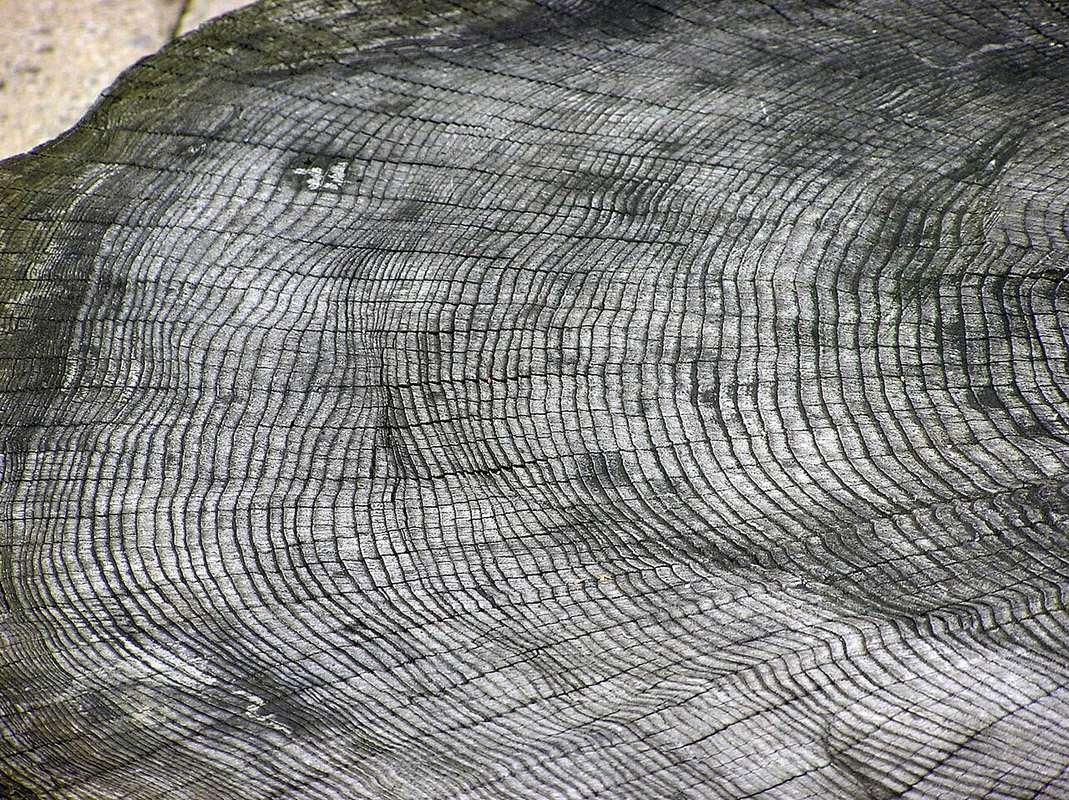
Just under the bark of a woody tree is a thin living layer called the cambium. It makes new cells. Those that form on the inside become wood. Those on the outside become bark.
In spring, when water is plentiful, the new wood cells are wide and thin-walled. That early wood looks lighter. Later in the season the cells are smaller and thicker-walled, and the wood looks darker. One light band plus one dark band is a year’s growth in many temperate trees.
Spring wood and summer wood
A wide ring usually means a favourable season: enough warmth and water. A narrow ring can mark drought, a cold summer, or a year when the tree was shaded or damaged. The ring is a record of that tree, not a weather station for a whole country.
Count the rings from the outside in, or look at a clean stump, and you have the age of that stem. A branch is younger than the trunk it grows from. The rings at the base of the trunk include the earliest years.
Reading a disc
Tropical trees in a climate with no dry season may not make clear annual rings, because growth never pauses. Rings are a tool for seasonal climates.
Long-lived trees and old timbers in buildings let people line up ring patterns from one sample to another. Matching a distinctive run of narrow and wide years can date a beam. That matching is dendrochronology.
Spring wood and summer wood
In a seasonal climate, a tree adds a layer of wood each growing season. The contrast between spring and late summer wood is the ring. Just under the bark of a woody tree is a thin living layer called the cambium. It makes new cells.
Put those two statements side by side. The first sets the condition. The second says what happens once that condition is met. How a tree makes a ring each year needs both. Drop the first and the second has nothing to explain. Drop the second and the first is only the scene.
Reading a disc
It makes new cells. Those that form on the inside become wood.
The order is the explanation. What the first sentence names has to be there before the result in the second sentence can show up. The piece does not ask you to accept the result first and hunt for a cause afterwards.
A check you can make
Those that form on the inside become wood. Those on the outside become bark.
A fair check is sequential. Confirm the first statement. Then see whether the second is the result of it, rather than a separate fact parked in the same piece. If the result shows up without the condition, this account does not cover what you are looking at.
The limit of the claim
Those on the outside become bark. In spring, when water is plentiful, the new wood cells are wide and thin-walled.
The two statements do different jobs. One says what is there, what it is made of, or what acts on it. The other says the change that follows. The title names the change. It is not an inventory of parts.
The same steps, in order
In spring, when water is plentiful, the new wood cells are wide and thin-walled. That early wood looks lighter.
Nothing in the second statement cancels the first. It carries the first forward or marks the limit of it. Remember only the result, and the cause goes missing. Remember only the cause, and you will not know what the piece says happens next.
Why the order matters
That early wood looks lighter. Later in the season the cells are smaller and thicker-walled, and the wood looks darker.
Read them as one path. Start at the first full stop and do not skip to the outcome. The words between the two statements are the mechanism. The title is the name of that path, not a second claim.
Condition, then outcome
Later in the season the cells are smaller and thicker-walled, and the wood looks darker. One light band plus one dark band is a year’s growth in many temperate trees.
The first statement can be true and still not finish the job. The second statement is the job finishing. Hold both, and the paragraph above stops being a list. It becomes the reason the title is worded as it is.
What the title is naming
One light band plus one dark band is a year’s growth in many temperate trees. A wide ring usually means a favourable season: enough warmth and water.
If you wanted a shorter version, it would be those two sentences and nothing else. Everything added around them is there so the dependence is obvious: the second does not happen unless the first has happened.
What has to come first
A wide ring usually means a favourable season: enough warmth and water. A narrow ring can mark drought, a cold summer, or a year when the tree was shaded or damaged.
Put those two statements side by side. The first sets the condition. The second says what happens once that condition is met. How a tree makes a ring each year needs both. Drop the first and the second has nothing to explain. Drop the second and the first is only the scene.
No correction has been appended to this story. If a line is wrong, tell the newsroom.