
What a starling murmuration is
A murmuration is a flock of starlings flying as one shape. Each bird is following simple cues from its neighbours.
Listen is a Plus feature Upgrade
Listening is not supported in this browser.
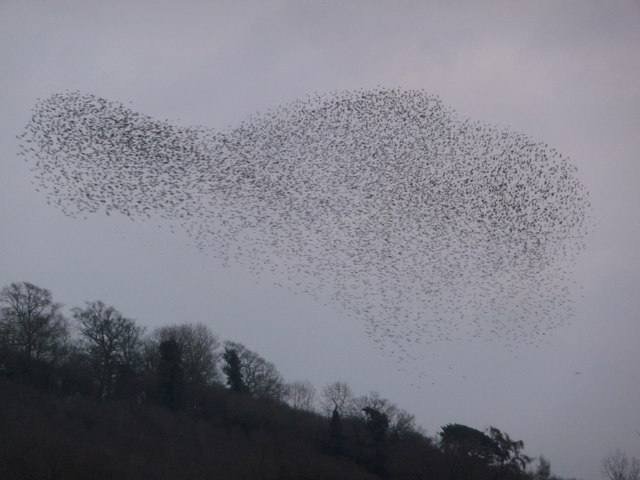
In autumn and winter, common starlings often roost together. Before they drop into the reeds or a pier, the flock can wheel across the sky in a dense, shifting cloud. That display is a murmuration.
There is no lead bird drawing a plan. Each starling matches the speed and direction of the birds closest to it, and keeps a little space so they do not collide. When many birds do this at once, a ripple can run through the flock.
A flock, not a single mind
A turn can look instant. It is a chain of small reactions. A bird on the edge banks, its neighbours copy that bank, and the movement spreads. The shape can look like smoke, a ribbon, or a ball.
Roosting together has plain advantages. Many eyes spot a peregrine or a sparrowhawk sooner, and a tight flock is a confusing target. Sharing a roost also puts the birds near one another at dawn, when they leave to feed.
Why they gather
Starlings are mimics and hole-nesters in the breeding season. The great winter flocks are a separate habit. Numbers at a roost rise and fall with the weather and the food in the surrounding fields.
You do not need special kit to watch one. A roost site used on one evening is often used again, so a path, a pier, or a reedbed can be worth a return visit at dusk.
A flock, not a single mind
A murmuration is a flock of starlings flying as one shape. Each bird is following simple cues from its neighbours. In autumn and winter, common starlings often roost together. Before they drop into the reeds or a pier, the flock can wheel across the sky in a dense, shifting cloud.
Put those two statements side by side. The first sets the condition. The second says what happens once that condition is met. What a starling murmuration is needs both. Drop the first and the second has nothing to explain. Drop the second and the first is only the scene.
Why they gather
Before they drop into the reeds or a pier, the flock can wheel across the sky in a dense, shifting cloud. That display is a murmuration.
The order is the explanation. What the first sentence names has to be there before the result in the second sentence can show up. The piece does not ask you to accept the result first and hunt for a cause afterwards.
A check you can make
That display is a murmuration. There is no lead bird drawing a plan.
A fair check is sequential. Confirm the first statement. Then see whether the second is the result of it, rather than a separate fact parked in the same piece. If the result shows up without the condition, this account does not cover what you are looking at.
The limit of the claim
There is no lead bird drawing a plan. Each starling matches the speed and direction of the birds closest to it, and keeps a little space so they do not collide.
The two statements do different jobs. One says what is there, what it is made of, or what acts on it. The other says the change that follows. The title names the change. It is not an inventory of parts.
The same steps, in order
Each starling matches the speed and direction of the birds closest to it, and keeps a little space so they do not collide. When many birds do this at once, a ripple can run through the flock.
Nothing in the second statement cancels the first. It carries the first forward or marks the limit of it. Remember only the result, and the cause goes missing. Remember only the cause, and you will not know what the piece says happens next.
Why the order matters
When many birds do this at once, a ripple can run through the flock. A turn can look instant.
Read them as one path. Start at the first full stop and do not skip to the outcome. The words between the two statements are the mechanism. The title is the name of that path, not a second claim.
Condition, then outcome
A turn can look instant. It is a chain of small reactions.
The first statement can be true and still not finish the job. The second statement is the job finishing. Hold both, and the paragraph above stops being a list. It becomes the reason the title is worded as it is.
What the title is naming
It is a chain of small reactions. A bird on the edge banks, its neighbours copy that bank, and the movement spreads.
If you wanted a shorter version, it would be those two sentences and nothing else. Everything added around them is there so the dependence is obvious: the second does not happen unless the first has happened.
What has to come first
A bird on the edge banks, its neighbours copy that bank, and the movement spreads. The shape can look like smoke, a ribbon, or a ball.
Put those two statements side by side. The first sets the condition. The second says what happens once that condition is met. What a starling murmuration is needs both. Drop the first and the second has nothing to explain. Drop the second and the first is only the scene.
No correction has been appended to this story. If a line is wrong, tell the newsroom.