
Why the sea has waves
Most waves are wind dragging on the water surface. The water moves in a circle. The wave shape travels forward.
Listen is a Plus feature Upgrade
Listening is not supported in this browser.
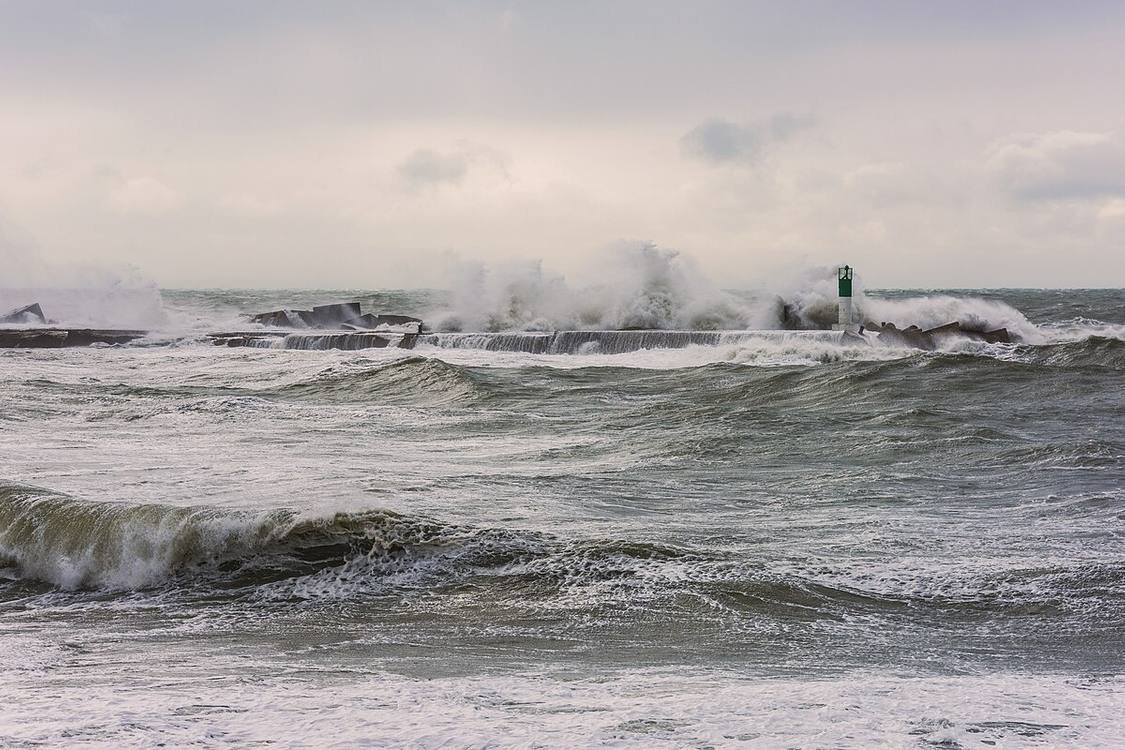
A breeze blowing across still water catches the surface. Small ripples give the wind something to push against, and the ripples grow into waves. A longer fetch, the distance of open water, and a longer blow build larger waves.
In deep water the wave is a moving shape, not a river of water heading for the beach. Each parcel of water travels in a loop and ends near where it started. The energy moves forward. The water mostly does not.
Wind on the surface
The size of a wave is its height from trough to crest. The distance from one crest to the next is the wavelength. A long, low swell can carry energy from a storm that is already over, far across the ocean.
As a wave enters shallow water, the looping motion touches the seabed and slows. The wavelength shortens and the crest steepens. When the crest gets too steep for the base, it topples. That is a breaker.
When a wave reaches shore
The direction can bend as well. The part of the wave that hits shallow water first slows first, so the crest swings to line up with the shore. Headlands receive waves from several angles. Bays are more sheltered.
Tides are a separate movement, driven by gravity, not by the wind. A wind wave can ride on a high tide. They add together at the beach, but they are made in different ways.
Wind on the surface
Most waves are wind dragging on the water surface. The water moves in a circle. The wave shape travels forward. A breeze blowing across still water catches the surface. Small ripples give the wind something to push against, and the ripples grow into waves.
Put those two statements side by side. The first sets the condition. The second says what happens once that condition is met. Why the sea has waves needs both. Drop the first and the second has nothing to explain. Drop the second and the first is only the scene.
When a wave reaches shore
Small ripples give the wind something to push against, and the ripples grow into waves. A longer fetch, the distance of open water, and a longer blow build larger waves.
The order is the explanation. What the first sentence names has to be there before the result in the second sentence can show up. The piece does not ask you to accept the result first and hunt for a cause afterwards.
A check you can make
A longer fetch, the distance of open water, and a longer blow build larger waves. In deep water the wave is a moving shape, not a river of water heading for the beach.
A fair check is sequential. Confirm the first statement. Then see whether the second is the result of it, rather than a separate fact parked in the same piece. If the result shows up without the condition, this account does not cover what you are looking at.
The limit of the claim
In deep water the wave is a moving shape, not a river of water heading for the beach. Each parcel of water travels in a loop and ends near where it started.
The two statements do different jobs. One says what is there, what it is made of, or what acts on it. The other says the change that follows. The title names the change. It is not an inventory of parts.
The same steps, in order
Each parcel of water travels in a loop and ends near where it started. The energy moves forward.
Nothing in the second statement cancels the first. It carries the first forward or marks the limit of it. Remember only the result, and the cause goes missing. Remember only the cause, and you will not know what the piece says happens next.
Why the order matters
The energy moves forward. The water mostly does not.
Read them as one path. Start at the first full stop and do not skip to the outcome. The words between the two statements are the mechanism. The title is the name of that path, not a second claim.
Condition, then outcome
The water mostly does not. The size of a wave is its height from trough to crest.
The first statement can be true and still not finish the job. The second statement is the job finishing. Hold both, and the paragraph above stops being a list. It becomes the reason the title is worded as it is.
What the title is naming
The size of a wave is its height from trough to crest. The distance from one crest to the next is the wavelength.
If you wanted a shorter version, it would be those two sentences and nothing else. Everything added around them is there so the dependence is obvious: the second does not happen unless the first has happened.
What has to come first
The distance from one crest to the next is the wavelength. A long, low swell can carry energy from a storm that is already over, far across the ocean.
Put those two statements side by side. The first sets the condition. The second says what happens once that condition is met. Why the sea has waves needs both. Drop the first and the second has nothing to explain. Drop the second and the first is only the scene.
No correction has been appended to this story. If a line is wrong, tell the newsroom.