
How a lever lifts a load
A lever turns on a pivot. A small force far from the pivot can balance a heavy load closer in.
Listen is a Plus feature Upgrade
Listening is not supported in this browser.
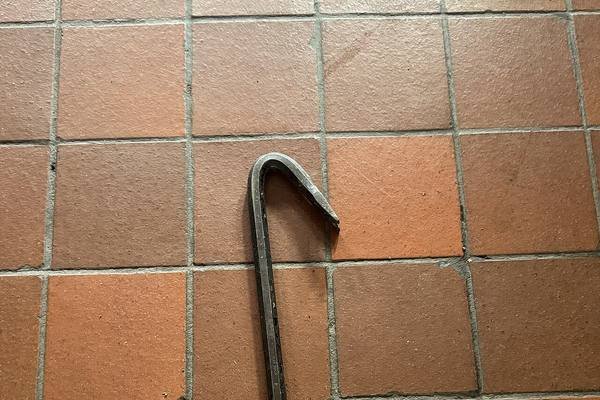
A lever is a rigid bar that turns on a fulcrum, the pivot. A crowbar, a see-saw, a wheelbarrow, and a pair of scissors are all levers. The shape changes. The rule does not.
Two turning effects have to balance. A force times its distance from the pivot is a moment. A small force with a long moment arm can balance a large force with a short one. That is why a long crowbar shifts a heavy stone.
The pivot
The stone moves a shorter distance than your hand. You push the handle through a long arc. The load end moves through a short arc. Work is force times distance, and you do not get extra work out. You trade a long, easy push for a short, heavy lift.
A wheelbarrow puts the load between the wheel, which is the pivot, and your hands. The handles are the long arm. Lifting the handles lifts a heavier load a smaller distance.
Trading distance for force
Scissors are two levers sharing a pivot. The closer the material is to the pivot, the more force the blades can apply. That is why thick card is easier to cut near the rivet than at the tips.
If the bar bends, it is no longer a simple lever. The rigidity matters. The gain in force is real, and it is paid for in distance.
The pivot
A lever turns on a pivot. A small force far from the pivot can balance a heavy load closer in. A lever is a rigid bar that turns on a fulcrum, the pivot. A crowbar, a see-saw, a wheelbarrow, and a pair of scissors are all levers.
Put those two statements side by side. The first sets the condition. The second says what happens once that condition is met. How a lever lifts a load needs both. Drop the first and the second has nothing to explain. Drop the second and the first is only the scene.
Trading distance for force
A crowbar, a see-saw, a wheelbarrow, and a pair of scissors are all levers. The shape changes.
The order is the explanation. What the first sentence names has to be there before the result in the second sentence can show up. The piece does not ask you to accept the result first and hunt for a cause afterwards.
A check you can make
The shape changes. The rule does not.
A fair check is sequential. Confirm the first statement. Then see whether the second is the result of it, rather than a separate fact parked in the same piece. If the result shows up without the condition, this account does not cover what you are looking at.
The limit of the claim
The rule does not. Two turning effects have to balance.
The two statements do different jobs. One says what is there, what it is made of, or what acts on it. The other says the change that follows. The title names the change. It is not an inventory of parts.
The same steps, in order
Two turning effects have to balance. A force times its distance from the pivot is a moment.
Nothing in the second statement cancels the first. It carries the first forward or marks the limit of it. Remember only the result, and the cause goes missing. Remember only the cause, and you will not know what the piece says happens next.
Why the order matters
A force times its distance from the pivot is a moment. A small force with a long moment arm can balance a large force with a short one.
Read them as one path. Start at the first full stop and do not skip to the outcome. The words between the two statements are the mechanism. The title is the name of that path, not a second claim.
Condition, then outcome
A small force with a long moment arm can balance a large force with a short one. That is why a long crowbar shifts a heavy stone.
The first statement can be true and still not finish the job. The second statement is the job finishing. Hold both, and the paragraph above stops being a list. It becomes the reason the title is worded as it is.
No correction has been appended to this story. If a line is wrong, tell the newsroom.