
How an earthquake is located
An earthquake is a sudden slip on a break in the rocks. Instruments time the waves, and the times reveal the place.
Listen is a Plus feature Upgrade
Listening is not supported in this browser.
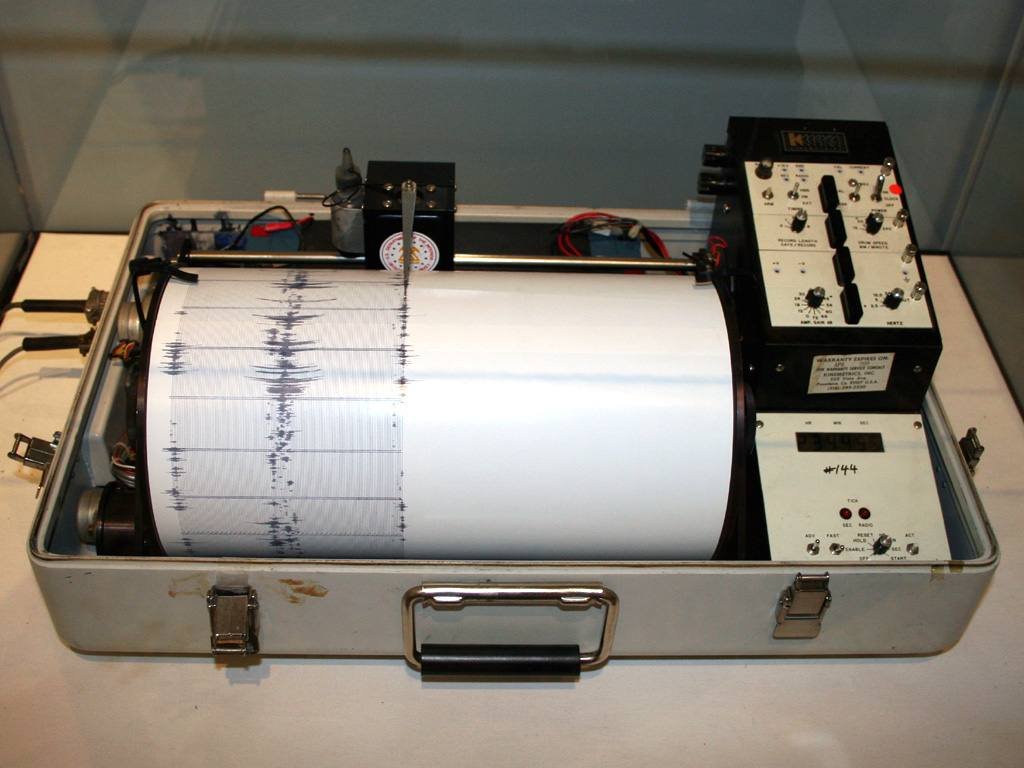
The outer shell of the Earth is broken into plates that move, slowly, against one another. Stress builds where they grind or pull. When the rock finally slips along a fault, it releases that stress as waves. That release is an earthquake.
The place on the fault where the slip begins is the focus, or hypocentre. The point on the surface directly above it is the epicentre. You can be many kilometres from the epicentre and still feel the waves.
A slip on a fault
The waves travel at different speeds. P waves, or primary waves, are faster and arrive first. S waves, or secondary waves, arrive later and do not pass through liquid. The gap between them, at a given station, grows with distance from the focus.
A single station knows roughly how far away the quake was, which puts it somewhere on a circle. A second station gives another circle. A third pins the crossing point. That is why networks of seismometers, not one instrument, locate quakes.
Three stations and a clock
Magnitude describes the size of the slip in a logarithmic way: a step up the scale is a large jump in the energy released, not a small one. Intensity describes how strong the shaking felt at a particular town, which depends on distance, depth, and the ground under the buildings.
Britain has faults and small quakes. The largest damage worldwide is at plate boundaries, where the slips are more frequent and often larger. The method of timing the waves is the same in either case.
A slip on a fault
An earthquake is a sudden slip on a break in the rocks. Instruments time the waves, and the times reveal the place. The outer shell of the Earth is broken into plates that move, slowly, against one another. Stress builds where they grind or pull.
Put those two statements side by side. The first sets the condition. The second says what happens once that condition is met. How an earthquake is located needs both. Drop the first and the second has nothing to explain. Drop the second and the first is only the scene.
Three stations and a clock
Stress builds where they grind or pull. When the rock finally slips along a fault, it releases that stress as waves.
The order is the explanation. What the first sentence names has to be there before the result in the second sentence can show up. The piece does not ask you to accept the result first and hunt for a cause afterwards.
A check you can make
When the rock finally slips along a fault, it releases that stress as waves. That release is an earthquake.
A fair check is sequential. Confirm the first statement. Then see whether the second is the result of it, rather than a separate fact parked in the same piece. If the result shows up without the condition, this account does not cover what you are looking at.
The limit of the claim
That release is an earthquake. The place on the fault where the slip begins is the focus, or hypocentre.
The two statements do different jobs. One says what is there, what it is made of, or what acts on it. The other says the change that follows. The title names the change. It is not an inventory of parts.
The same steps, in order
The place on the fault where the slip begins is the focus, or hypocentre. The point on the surface directly above it is the epicentre.
Nothing in the second statement cancels the first. It carries the first forward or marks the limit of it. Remember only the result, and the cause goes missing. Remember only the cause, and you will not know what the piece says happens next.
Why the order matters
The point on the surface directly above it is the epicentre. You can be many kilometres from the epicentre and still feel the waves.
Read them as one path. Start at the first full stop and do not skip to the outcome. The words between the two statements are the mechanism. The title is the name of that path, not a second claim.
Condition, then outcome
You can be many kilometres from the epicentre and still feel the waves. The waves travel at different speeds.
The first statement can be true and still not finish the job. The second statement is the job finishing. Hold both, and the paragraph above stops being a list. It becomes the reason the title is worded as it is.
What the title is naming
The waves travel at different speeds. P waves, or primary waves, are faster and arrive first.
If you wanted a shorter version, it would be those two sentences and nothing else. Everything added around them is there so the dependence is obvious: the second does not happen unless the first has happened.
What has to come first
P waves, or primary waves, are faster and arrive first. S waves, or secondary waves, arrive later and do not pass through liquid.
Put those two statements side by side. The first sets the condition. The second says what happens once that condition is met. How an earthquake is located needs both. Drop the first and the second has nothing to explain. Drop the second and the first is only the scene.
The result that follows
S waves, or secondary waves, arrive later and do not pass through liquid. The gap between them, at a given station, grows with distance from the focus.
The order is the explanation. What the first sentence names has to be there before the result in the second sentence can show up. The piece does not ask you to accept the result first and hunt for a cause afterwards.
A check you can make
The gap between them, at a given station, grows with distance from the focus. A single station knows roughly how far away the quake was, which puts it somewhere on a circle.
A fair check is sequential. Confirm the first statement. Then see whether the second is the result of it, rather than a separate fact parked in the same piece. If the result shows up without the condition, this account does not cover what you are looking at.
The limit of the claim
A single station knows roughly how far away the quake was, which puts it somewhere on a circle. A second station gives another circle.
The two statements do different jobs. One says what is there, what it is made of, or what acts on it. The other says the change that follows. The title names the change. It is not an inventory of parts.
No correction has been appended to this story. If a line is wrong, tell the newsroom.