
How lightning forms
A thundercloud separates electric charge. Lightning is the sudden flow that evens it out. Thunder is the sound of the heated air.
Listen is a Plus feature Upgrade
Listening is not supported in this browser.
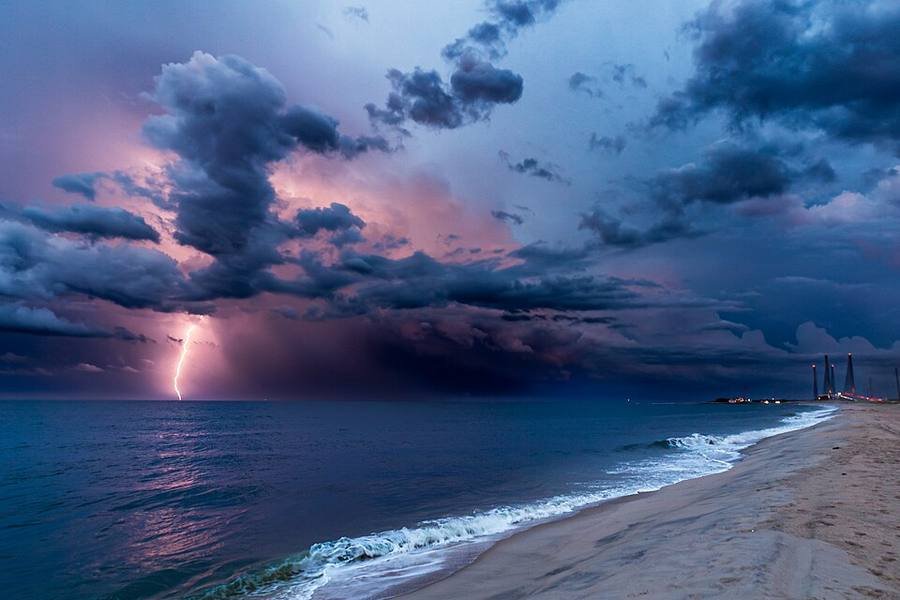
Inside a tall cumulus or cumulonimbus cloud, ice particles, graupel, and water droplets are thrown about by strong updraughts. Collisions between them leave some particles with a positive charge and others with a negative charge.
The charges sort by height. The top of a storm cloud is often positive and the lower part negative. The ground beneath a negative region becomes positively charged in response. The air, normally an insulator, is now under a growing electrical stress.
Charge in a cloud
When the stress is great enough, a channel of air ionises and becomes a conductor. A stepped leader works downward in a jagged path. An upward spark from the ground or a tall object may meet it. The bright return stroke is the main current racing along that channel. That is the flash you see.
The channel is heated, in a fraction of a second, to a temperature hotter than the surface of the sun. The air expands violently. That expansion is thunder. Light reaches you almost at once. Sound takes about three seconds to cover a kilometre, which is why you can count the gap and estimate the distance.
The flash and the bang
Lightning seeks the easiest path. Tall, pointed, isolated objects are struck more often. A building’s lightning conductor gives the current a metal route into the ground so it does not pass through the structure as heat.
Sheet lightning is often a flash inside or behind cloud, lighting the cloud rather than a bolt you can trace to the ground. The physics of charge and discharge is the same.
Charge in a cloud
A thundercloud separates electric charge. Lightning is the sudden flow that evens it out. Thunder is the sound of the heated air. Inside a tall cumulus or cumulonimbus cloud, ice particles, graupel, and water droplets are thrown about by strong updraughts. Collisions between them leave some particles with a positive charge and others with a negative charge.
Put those two statements side by side. The first sets the condition. The second says what happens once that condition is met. How lightning forms needs both. Drop the first and the second has nothing to explain. Drop the second and the first is only the scene.
The flash and the bang
Collisions between them leave some particles with a positive charge and others with a negative charge. The charges sort by height.
The order is the explanation. What the first sentence names has to be there before the result in the second sentence can show up. The piece does not ask you to accept the result first and hunt for a cause afterwards.
A check you can make
The charges sort by height. The top of a storm cloud is often positive and the lower part negative.
A fair check is sequential. Confirm the first statement. Then see whether the second is the result of it, rather than a separate fact parked in the same piece. If the result shows up without the condition, this account does not cover what you are looking at.
The limit of the claim
The top of a storm cloud is often positive and the lower part negative. The ground beneath a negative region becomes positively charged in response.
The two statements do different jobs. One says what is there, what it is made of, or what acts on it. The other says the change that follows. The title names the change. It is not an inventory of parts.
The same steps, in order
The ground beneath a negative region becomes positively charged in response. The air, normally an insulator, is now under a growing electrical stress.
Nothing in the second statement cancels the first. It carries the first forward or marks the limit of it. Remember only the result, and the cause goes missing. Remember only the cause, and you will not know what the piece says happens next.
Why the order matters
The air, normally an insulator, is now under a growing electrical stress. When the stress is great enough, a channel of air ionises and becomes a conductor.
Read them as one path. Start at the first full stop and do not skip to the outcome. The words between the two statements are the mechanism. The title is the name of that path, not a second claim.
Condition, then outcome
When the stress is great enough, a channel of air ionises and becomes a conductor. A stepped leader works downward in a jagged path.
The first statement can be true and still not finish the job. The second statement is the job finishing. Hold both, and the paragraph above stops being a list. It becomes the reason the title is worded as it is.
What the title is naming
A stepped leader works downward in a jagged path. An upward spark from the ground or a tall object may meet it.
If you wanted a shorter version, it would be those two sentences and nothing else. Everything added around them is there so the dependence is obvious: the second does not happen unless the first has happened.
What has to come first
An upward spark from the ground or a tall object may meet it. The bright return stroke is the main current racing along that channel.
Put those two statements side by side. The first sets the condition. The second says what happens once that condition is met. How lightning forms needs both. Drop the first and the second has nothing to explain. Drop the second and the first is only the scene.
The result that follows
The bright return stroke is the main current racing along that channel. That is the flash you see.
The order is the explanation. What the first sentence names has to be there before the result in the second sentence can show up. The piece does not ask you to accept the result first and hunt for a cause afterwards.
A check you can make
That is the flash you see. The channel is heated, in a fraction of a second, to a temperature hotter than the surface of the sun.
A fair check is sequential. Confirm the first statement. Then see whether the second is the result of it, rather than a separate fact parked in the same piece. If the result shows up without the condition, this account does not cover what you are looking at.
The limit of the claim
The channel is heated, in a fraction of a second, to a temperature hotter than the surface of the sun. The air expands violently.
The two statements do different jobs. One says what is there, what it is made of, or what acts on it. The other says the change that follows. The title names the change. It is not an inventory of parts.
No correction has been appended to this story. If a line is wrong, tell the newsroom.