
How sound travels
Sound is a wave of pressure moving through air, water, or a solid. It is not the air itself rushing from the source to your ear.
Listen is a Plus feature Upgrade
Listening is not supported in this browser.
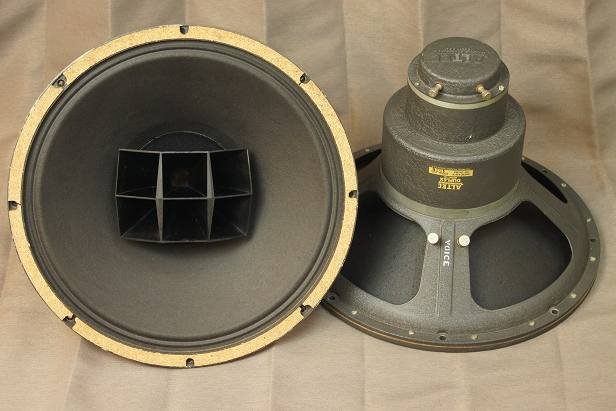
A vibrating object, a string, a loudspeaker, a vocal fold, pushes on the air next to it. That air is squeezed, then it springs back and squeezes the air beyond it. The squeeze travels. The air molecules only shuffle a tiny distance.
The travelling squeeze is a longitudinal wave. Regions of higher pressure, compressions, alternate with regions of lower pressure, rarefactions. Your ear detects those changes and the brain reads them as sound.
A pressure wave
The wave needs a medium. In air at room temperature it moves at roughly 340 metres a second. In water it moves faster, and in steel faster still, because the molecules are more tightly linked and pass the push on more quickly. In a vacuum there is nothing to push, which is why sound does not cross empty space.
Pitch is the frequency, how many compressions pass you each second. A higher note is a faster vibration, not a faster wave. Loudness is the size of the pressure change. A bigger shove is a louder sound.
Speed and silence
The wave spreads and loses intensity. It also reflects off hard walls, which is an echo, and it bends around corners less readily than light. Low notes bend around obstacles more than high ones.
When a source moves towards you, the compressions arrive more often and the note sounds higher. Move away and the note drops. That is the Doppler effect. The source has not changed its vibration. The spacing of the arriving waves has.
A pressure wave
Sound is a wave of pressure moving through air, water, or a solid. It is not the air itself rushing from the source to your ear. A vibrating object, a string, a loudspeaker, a vocal fold, pushes on the air next to it. That air is squeezed, then it springs back and squeezes the air beyond it.
Put those two statements side by side. The first sets the condition. The second says what happens once that condition is met. How sound travels needs both. Drop the first and the second has nothing to explain. Drop the second and the first is only the scene.
Speed and silence
That air is squeezed, then it springs back and squeezes the air beyond it. The squeeze travels.
The order is the explanation. What the first sentence names has to be there before the result in the second sentence can show up. The piece does not ask you to accept the result first and hunt for a cause afterwards.
A check you can make
The squeeze travels. The air molecules only shuffle a tiny distance.
A fair check is sequential. Confirm the first statement. Then see whether the second is the result of it, rather than a separate fact parked in the same piece. If the result shows up without the condition, this account does not cover what you are looking at.
The limit of the claim
The air molecules only shuffle a tiny distance. The travelling squeeze is a longitudinal wave.
The two statements do different jobs. One says what is there, what it is made of, or what acts on it. The other says the change that follows. The title names the change. It is not an inventory of parts.
The same steps, in order
The travelling squeeze is a longitudinal wave. Regions of higher pressure, compressions, alternate with regions of lower pressure, rarefactions.
Nothing in the second statement cancels the first. It carries the first forward or marks the limit of it. Remember only the result, and the cause goes missing. Remember only the cause, and you will not know what the piece says happens next.
Why the order matters
Regions of higher pressure, compressions, alternate with regions of lower pressure, rarefactions. Your ear detects those changes and the brain reads them as sound.
Read them as one path. Start at the first full stop and do not skip to the outcome. The words between the two statements are the mechanism. The title is the name of that path, not a second claim.
Condition, then outcome
Your ear detects those changes and the brain reads them as sound. The wave needs a medium.
The first statement can be true and still not finish the job. The second statement is the job finishing. Hold both, and the paragraph above stops being a list. It becomes the reason the title is worded as it is.
What the title is naming
The wave needs a medium. In air at room temperature it moves at roughly 340 metres a second.
If you wanted a shorter version, it would be those two sentences and nothing else. Everything added around them is there so the dependence is obvious: the second does not happen unless the first has happened.
What has to come first
In air at room temperature it moves at roughly 340 metres a second. In water it moves faster, and in steel faster still, because the molecules are more tightly linked and pass the push on more quickly.
Put those two statements side by side. The first sets the condition. The second says what happens once that condition is met. How sound travels needs both. Drop the first and the second has nothing to explain. Drop the second and the first is only the scene.
No correction has been appended to this story. If a line is wrong, tell the newsroom.