
How a canal lock works
A lock is a water lift. It raises or lowers a boat by filling or emptying a chamber between two pairs of gates.
Listen is a Plus feature Upgrade
Listening is not supported in this browser.
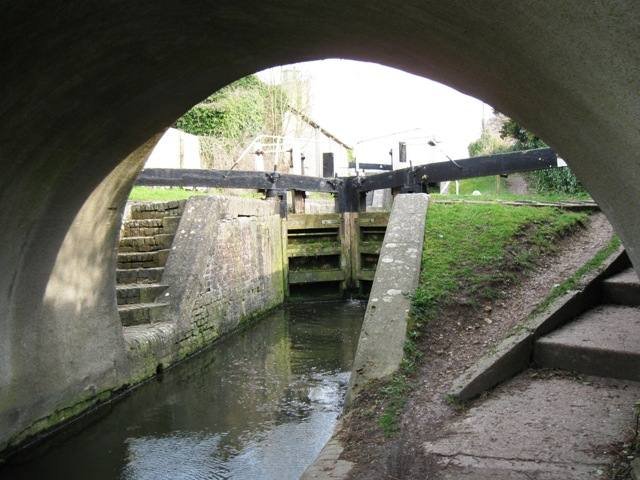
Canals are built in level pounds. Where the land rises, a lock joins a higher pound to a lower one. The chamber between them can be filled to the upper level or emptied to the lower level. The boat floats up or down with the water.
Each end has a gate, or a pair of gates, that meets in a V pointing upstream. Water pressure holds them shut. You cannot swing the lower gates open while the chamber is full, because the upper water is leaning on them. That is a safety, not a fault.
A chamber with two doors
Sluices, sometimes called paddles, let water in or out. Open the upper sluices and water runs from the pound above into the chamber. Open the lower sluices and the chamber drains downhill. The boat rises or falls a few metres, slowly enough to stand in.
The order matters. Going up, the chamber is emptied first, the lower gates open, the boat enters, the gates and lower sluices close, and the upper sluices fill the chamber. At the top, the upper gates open onto the higher pound. Going down is the same steps in reverse.
Which way the water goes
A flight is a staircase of locks. Each one uses water from the pound above it. Busy flights can draw a summit pound down, which is why reservoirs were built beside old canals, to put that water back.
The gates, the beams you lean on, and the windlasses that lift the paddles are all part of one machine. Leave every paddle down and every gate shut behind you, or the next pound starts to drain.
A chamber with two doors
A lock is a water lift. It raises or lowers a boat by filling or emptying a chamber between two pairs of gates. Canals are built in level pounds. Where the land rises, a lock joins a higher pound to a lower one.
Put those two statements side by side. The first sets the condition. The second says what happens once that condition is met. How a canal lock works needs both. Drop the first and the second has nothing to explain. Drop the second and the first is only the scene.
Which way the water goes
Where the land rises, a lock joins a higher pound to a lower one. The chamber between them can be filled to the upper level or emptied to the lower level.
The order is the explanation. What the first sentence names has to be there before the result in the second sentence can show up. The piece does not ask you to accept the result first and hunt for a cause afterwards.
A check you can make
The chamber between them can be filled to the upper level or emptied to the lower level. The boat floats up or down with the water.
A fair check is sequential. Confirm the first statement. Then see whether the second is the result of it, rather than a separate fact parked in the same piece. If the result shows up without the condition, this account does not cover what you are looking at.
The limit of the claim
The boat floats up or down with the water. Each end has a gate, or a pair of gates, that meets in a V pointing upstream.
The two statements do different jobs. One says what is there, what it is made of, or what acts on it. The other says the change that follows. The title names the change. It is not an inventory of parts.
The same steps, in order
Each end has a gate, or a pair of gates, that meets in a V pointing upstream. Water pressure holds them shut.
Nothing in the second statement cancels the first. It carries the first forward or marks the limit of it. Remember only the result, and the cause goes missing. Remember only the cause, and you will not know what the piece says happens next.
Why the order matters
Water pressure holds them shut. You cannot swing the lower gates open while the chamber is full, because the upper water is leaning on them.
Read them as one path. Start at the first full stop and do not skip to the outcome. The words between the two statements are the mechanism. The title is the name of that path, not a second claim.
Condition, then outcome
You cannot swing the lower gates open while the chamber is full, because the upper water is leaning on them. That is a safety, not a fault.
The first statement can be true and still not finish the job. The second statement is the job finishing. Hold both, and the paragraph above stops being a list. It becomes the reason the title is worded as it is.
What the title is naming
That is a safety, not a fault. Sluices, sometimes called paddles, let water in or out.
If you wanted a shorter version, it would be those two sentences and nothing else. Everything added around them is there so the dependence is obvious: the second does not happen unless the first has happened.
What has to come first
Sluices, sometimes called paddles, let water in or out. Open the upper sluices and water runs from the pound above into the chamber.
Put those two statements side by side. The first sets the condition. The second says what happens once that condition is met. How a canal lock works needs both. Drop the first and the second has nothing to explain. Drop the second and the first is only the scene.
The result that follows
Open the upper sluices and water runs from the pound above into the chamber. Open the lower sluices and the chamber drains downhill.
The order is the explanation. What the first sentence names has to be there before the result in the second sentence can show up. The piece does not ask you to accept the result first and hunt for a cause afterwards.
A check you can make
Open the lower sluices and the chamber drains downhill. The boat rises or falls a few metres, slowly enough to stand in.
A fair check is sequential. Confirm the first statement. Then see whether the second is the result of it, rather than a separate fact parked in the same piece. If the result shows up without the condition, this account does not cover what you are looking at.
The limit of the claim
The boat rises or falls a few metres, slowly enough to stand in. The order matters.
The two statements do different jobs. One says what is there, what it is made of, or what acts on it. The other says the change that follows. The title names the change. It is not an inventory of parts.
No correction has been appended to this story. If a line is wrong, tell the newsroom.