
How a chain ferry crosses a river
Some river ferries pull themselves along a chain laid on the bed. The chain keeps the boat on a fixed line in a tide or a current.
Listen is a Plus feature Upgrade
Listening is not supported in this browser.
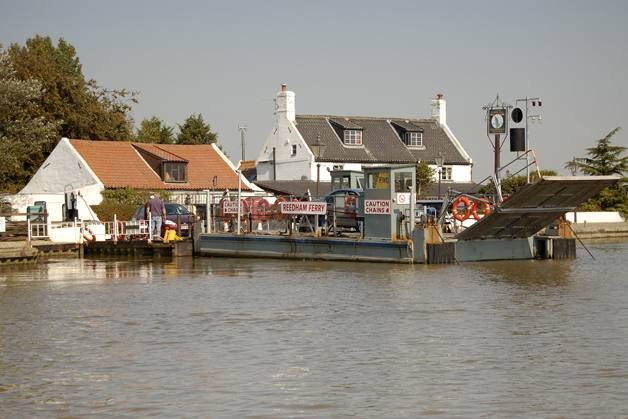
A chain ferry, sometimes called a floating bridge, runs on a chain or cable anchored on both banks. The chain passes through the hull, over a wheel or a drum that the engine turns. Haul on the chain and the boat walks across. The chain itself stays put on the bed.
The line is fixed. Wind and tide push the hull, but they cannot take it downstream, because the chain will not let them. That is the point on a river with a strong current, or on a narrow crossing where a free boat would be carried onto moorings.
A chain on the bed
The deck is a platform for a few vehicles or for people on foot. Ramps drop onto the slipways. The crossing is short, often a few minutes, and the timetable is the time it takes to load, haul, and unload.
You can see the difference from a rowing ferry or a small passenger boat, which steers a course and uses the current. Those need a cox who aims upstream of the landing. The chain ferry does not aim. It follows the iron.
Why not a free boat
The chain lies on the bed between trips, so other traffic can pass over it. A tall mast or a deep keel still has to treat the crossing as a marked place. Charts show it. The ferry has right of way on its own line while it is moving.
It is an old answer, and a local one. Most rivers are crossed by bridges. Where a bridge was too dear, or the channel had to stay open for shipping, a chain and a hull did the same job at water level.
A chain on the bed
Some river ferries pull themselves along a chain laid on the bed. The chain keeps the boat on a fixed line in a tide or a current. A chain ferry, sometimes called a floating bridge, runs on a chain or cable anchored on both banks. The chain passes through the hull, over a wheel or a drum that the engine turns.
Put those two statements side by side. The first sets the condition. The second says what happens once that condition is met. How a chain ferry crosses a river needs both. Drop the first and the second has nothing to explain. Drop the second and the first is only the scene.
Why not a free boat
The chain passes through the hull, over a wheel or a drum that the engine turns. Haul on the chain and the boat walks across.
The order is the explanation. What the first sentence names has to be there before the result in the second sentence can show up. The piece does not ask you to accept the result first and hunt for a cause afterwards.
A check you can make
Haul on the chain and the boat walks across. The chain itself stays put on the bed.
A fair check is sequential. Confirm the first statement. Then see whether the second is the result of it, rather than a separate fact parked in the same piece. If the result shows up without the condition, this account does not cover what you are looking at.
The limit of the claim
The chain itself stays put on the bed. The line is fixed.
The two statements do different jobs. One says what is there, what it is made of, or what acts on it. The other says the change that follows. The title names the change. It is not an inventory of parts.
The same steps, in order
The line is fixed. Wind and tide push the hull, but they cannot take it downstream, because the chain will not let them.
Nothing in the second statement cancels the first. It carries the first forward or marks the limit of it. Remember only the result, and the cause goes missing. Remember only the cause, and you will not know what the piece says happens next.
Why the order matters
Wind and tide push the hull, but they cannot take it downstream, because the chain will not let them. That is the point on a river with a strong current, or on a narrow crossing where a free boat would be carried onto moorings.
Read them as one path. Start at the first full stop and do not skip to the outcome. The words between the two statements are the mechanism. The title is the name of that path, not a second claim.
Condition, then outcome
That is the point on a river with a strong current, or on a narrow crossing where a free boat would be carried onto moorings. The deck is a platform for a few vehicles or for people on foot.
The first statement can be true and still not finish the job. The second statement is the job finishing. Hold both, and the paragraph above stops being a list. It becomes the reason the title is worded as it is.
What the title is naming
The deck is a platform for a few vehicles or for people on foot. Ramps drop onto the slipways.
If you wanted a shorter version, it would be those two sentences and nothing else. Everything added around them is there so the dependence is obvious: the second does not happen unless the first has happened.
What has to come first
Ramps drop onto the slipways. The crossing is short, often a few minutes, and the timetable is the time it takes to load, haul, and unload.
Put those two statements side by side. The first sets the condition. The second says what happens once that condition is met. How a chain ferry crosses a river needs both. Drop the first and the second has nothing to explain. Drop the second and the first is only the scene.
The result that follows
The crossing is short, often a few minutes, and the timetable is the time it takes to load, haul, and unload. You can see the difference from a rowing ferry or a small passenger boat, which steers a course and uses the current.
The order is the explanation. What the first sentence names has to be there before the result in the second sentence can show up. The piece does not ask you to accept the result first and hunt for a cause afterwards.
A check you can make
You can see the difference from a rowing ferry or a small passenger boat, which steers a course and uses the current. Those need a cox who aims upstream of the landing.
A fair check is sequential. Confirm the first statement. Then see whether the second is the result of it, rather than a separate fact parked in the same piece. If the result shows up without the condition, this account does not cover what you are looking at.
The limit of the claim
Those need a cox who aims upstream of the landing. The chain ferry does not aim.
The two statements do different jobs. One says what is there, what it is made of, or what acts on it. The other says the change that follows. The title names the change. It is not an inventory of parts.
The same steps, in order
The chain ferry does not aim. It follows the iron.
Nothing in the second statement cancels the first. It carries the first forward or marks the limit of it. Remember only the result, and the cause goes missing. Remember only the cause, and you will not know what the piece says happens next.
Why the order matters
It follows the iron. The chain lies on the bed between trips, so other traffic can pass over it.
Read them as one path. Start at the first full stop and do not skip to the outcome. The words between the two statements are the mechanism. The title is the name of that path, not a second claim.
No correction has been appended to this story. If a line is wrong, tell the newsroom.