
How a passport chip works
A modern passport has a small chip in the cover. It holds the same details as the photo page, and a reader picks them up at very short range.
Listen is a Plus feature Upgrade
Listening is not supported in this browser.
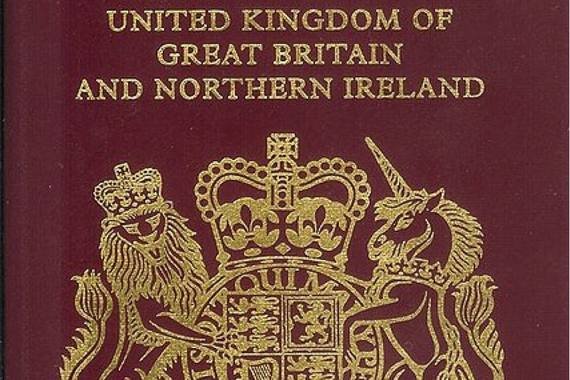
The chip is a contactless circuit, the same family as a bank card’s tap-to-pay chip, with a thin aerial in the cover. It has no battery. The reader’s radio field powers it for the moment of the check. Move the book away and the chip goes silent.
The file on the chip repeats what is printed: name, date of birth, passport number, nationality, the dates, and a copy of the photograph. The idea is that the printed page and the chip can be compared. A page that has been altered will not match the chip.
What is stored
The chip will not talk to any passer-by with a phone in a crowd, in the ordinary design. Access uses the machine-readable lines printed on the photo page. The reader has to see those lines, optically, before it can open the chip. The book has to be presented, not merely carried past.
A digital signature, checked against a certificate from the issuing country, lets the reader confirm the file was written by that country’s passport authority and has not been edited since. This is the same idea as a tamper-evident seal, done with mathematics.
How the reader is allowed in
The range is a few centimetres. That is a choice. A longer range would be easier to read from a pocket and easier to misuse. The short range is part of the protection, along with the printed-line key.
None of this replaces the officer. The chip speeds the comparison and makes a crude alteration harder. The booklet is still a document you hold, and the photograph is still the thing a person looks at.
What is stored
A modern passport has a small chip in the cover. It holds the same details as the photo page, and a reader picks them up at very short range. The chip is a contactless circuit, the same family as a bank card’s tap-to-pay chip, with a thin aerial in the cover. It has no battery.
Put those two statements side by side. The first sets the condition. The second says what happens once that condition is met. How a passport chip works needs both. Drop the first and the second has nothing to explain. Drop the second and the first is only the scene.
How the reader is allowed in
It has no battery. The reader’s radio field powers it for the moment of the check.
The order is the explanation. What the first sentence names has to be there before the result in the second sentence can show up. The piece does not ask you to accept the result first and hunt for a cause afterwards.
A check you can make
The reader’s radio field powers it for the moment of the check. Move the book away and the chip goes silent.
A fair check is sequential. Confirm the first statement. Then see whether the second is the result of it, rather than a separate fact parked in the same piece. If the result shows up without the condition, this account does not cover what you are looking at.
The limit of the claim
Move the book away and the chip goes silent. The file on the chip repeats what is printed: name, date of birth, passport number, nationality, the dates, and a copy of the photograph.
The two statements do different jobs. One says what is there, what it is made of, or what acts on it. The other says the change that follows. The title names the change. It is not an inventory of parts.
The same steps, in order
The file on the chip repeats what is printed: name, date of birth, passport number, nationality, the dates, and a copy of the photograph. The idea is that the printed page and the chip can be compared.
Nothing in the second statement cancels the first. It carries the first forward or marks the limit of it. Remember only the result, and the cause goes missing. Remember only the cause, and you will not know what the piece says happens next.
Why the order matters
The idea is that the printed page and the chip can be compared. A page that has been altered will not match the chip.
Read them as one path. Start at the first full stop and do not skip to the outcome. The words between the two statements are the mechanism. The title is the name of that path, not a second claim.
Condition, then outcome
A page that has been altered will not match the chip. The chip will not talk to any passer-by with a phone in a crowd, in the ordinary design.
The first statement can be true and still not finish the job. The second statement is the job finishing. Hold both, and the paragraph above stops being a list. It becomes the reason the title is worded as it is.
What the title is naming
The chip will not talk to any passer-by with a phone in a crowd, in the ordinary design. Access uses the machine-readable lines printed on the photo page.
If you wanted a shorter version, it would be those two sentences and nothing else. Everything added around them is there so the dependence is obvious: the second does not happen unless the first has happened.
What has to come first
Access uses the machine-readable lines printed on the photo page. The reader has to see those lines, optically, before it can open the chip.
Put those two statements side by side. The first sets the condition. The second says what happens once that condition is met. How a passport chip works needs both. Drop the first and the second has nothing to explain. Drop the second and the first is only the scene.
The result that follows
The reader has to see those lines, optically, before it can open the chip. The book has to be presented, not merely carried past.
The order is the explanation. What the first sentence names has to be there before the result in the second sentence can show up. The piece does not ask you to accept the result first and hunt for a cause afterwards.
A check you can make
The book has to be presented, not merely carried past. A digital signature, checked against a certificate from the issuing country, lets the reader confirm the file was written by that country’s passport authority and has not been edited since.
A fair check is sequential. Confirm the first statement. Then see whether the second is the result of it, rather than a separate fact parked in the same piece. If the result shows up without the condition, this account does not cover what you are looking at.
No correction has been appended to this story. If a line is wrong, tell the newsroom.