
How a railway signal works
A railway signal tells the driver whether the next section of track is clear. The line is divided into blocks so two trains do not share one.
Listen is a Plus feature Upgrade
Listening is not supported in this browser.
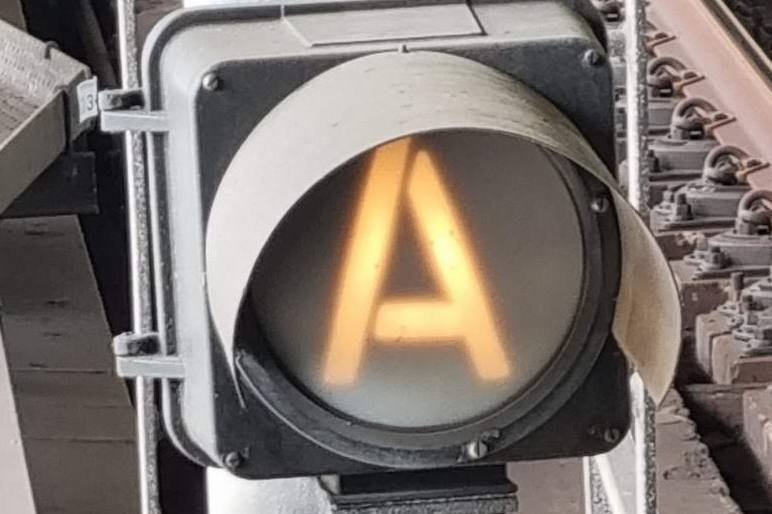
A train cannot swerve. Safety depends on keeping a gap between trains. The track is split into sections called blocks, and a train is not meant to enter a block that is already occupied.
Older signals used a semaphore arm. Horizontal meant stop. Lowered or raised at an angle meant the line ahead was clear, depending on the railway’s own rule. The arm was readable against the sky.
Blocks of track
Colour-light signals do the same job with lamps. Red means stop. Yellow means caution, the next signal is red. Two yellows mean preliminary caution. Green means clear. The exact aspects vary, but the idea is a chain of warnings so a driver can brake in time.
Track circuits and axle counters tell the signalling system whether a block is occupied. A track circuit uses the rails as part of an electrical loop. A train’s wheels short the loop and the signal behind the train is held at danger.
Lights and arms
Points, the movable rails that switch a train from one route to another, are interlocked with the signals. The signal cannot clear unless the points are set and locked for that route. The interlocking is mechanical in old boxes and electronic in new ones.
The driver reads the signal. The signal does not steer the train. Automatic train protection on some lines will brake a train that passes a red, but the message on the post is still the same: this block, or the next, is not clear.
Blocks of track
A railway signal tells the driver whether the next section of track is clear. The line is divided into blocks so two trains do not share one. A train cannot swerve. Safety depends on keeping a gap between trains.
Put those two statements side by side. The first sets the condition. The second says what happens once that condition is met. How a railway signal works needs both. Drop the first and the second has nothing to explain. Drop the second and the first is only the scene.
Lights and arms
Safety depends on keeping a gap between trains. The track is split into sections called blocks, and a train is not meant to enter a block that is already occupied.
The order is the explanation. What the first sentence names has to be there before the result in the second sentence can show up. The piece does not ask you to accept the result first and hunt for a cause afterwards.
A check you can make
The track is split into sections called blocks, and a train is not meant to enter a block that is already occupied. Older signals used a semaphore arm.
A fair check is sequential. Confirm the first statement. Then see whether the second is the result of it, rather than a separate fact parked in the same piece. If the result shows up without the condition, this account does not cover what you are looking at.
The limit of the claim
Older signals used a semaphore arm. Horizontal meant stop.
The two statements do different jobs. One says what is there, what it is made of, or what acts on it. The other says the change that follows. The title names the change. It is not an inventory of parts.
The same steps, in order
Horizontal meant stop. Lowered or raised at an angle meant the line ahead was clear, depending on the railway’s own rule.
Nothing in the second statement cancels the first. It carries the first forward or marks the limit of it. Remember only the result, and the cause goes missing. Remember only the cause, and you will not know what the piece says happens next.
Why the order matters
Lowered or raised at an angle meant the line ahead was clear, depending on the railway’s own rule. The arm was readable against the sky.
Read them as one path. Start at the first full stop and do not skip to the outcome. The words between the two statements are the mechanism. The title is the name of that path, not a second claim.
Condition, then outcome
The arm was readable against the sky. Colour-light signals do the same job with lamps.
The first statement can be true and still not finish the job. The second statement is the job finishing. Hold both, and the paragraph above stops being a list. It becomes the reason the title is worded as it is.
What the title is naming
Colour-light signals do the same job with lamps. Red means stop.
If you wanted a shorter version, it would be those two sentences and nothing else. Everything added around them is there so the dependence is obvious: the second does not happen unless the first has happened.
What has to come first
Red means stop. Yellow means caution, the next signal is red.
Put those two statements side by side. The first sets the condition. The second says what happens once that condition is met. How a railway signal works needs both. Drop the first and the second has nothing to explain. Drop the second and the first is only the scene.
The result that follows
Yellow means caution, the next signal is red. Two yellows mean preliminary caution.
The order is the explanation. What the first sentence names has to be there before the result in the second sentence can show up. The piece does not ask you to accept the result first and hunt for a cause afterwards.
No correction has been appended to this story. If a line is wrong, tell the newsroom.