
How to read a paper map
A paper map is a scaled drawing of the ground. Scale, north, contours, and the key turn the sheet into a route.
Listen is a Plus feature Upgrade
Listening is not supported in this browser.
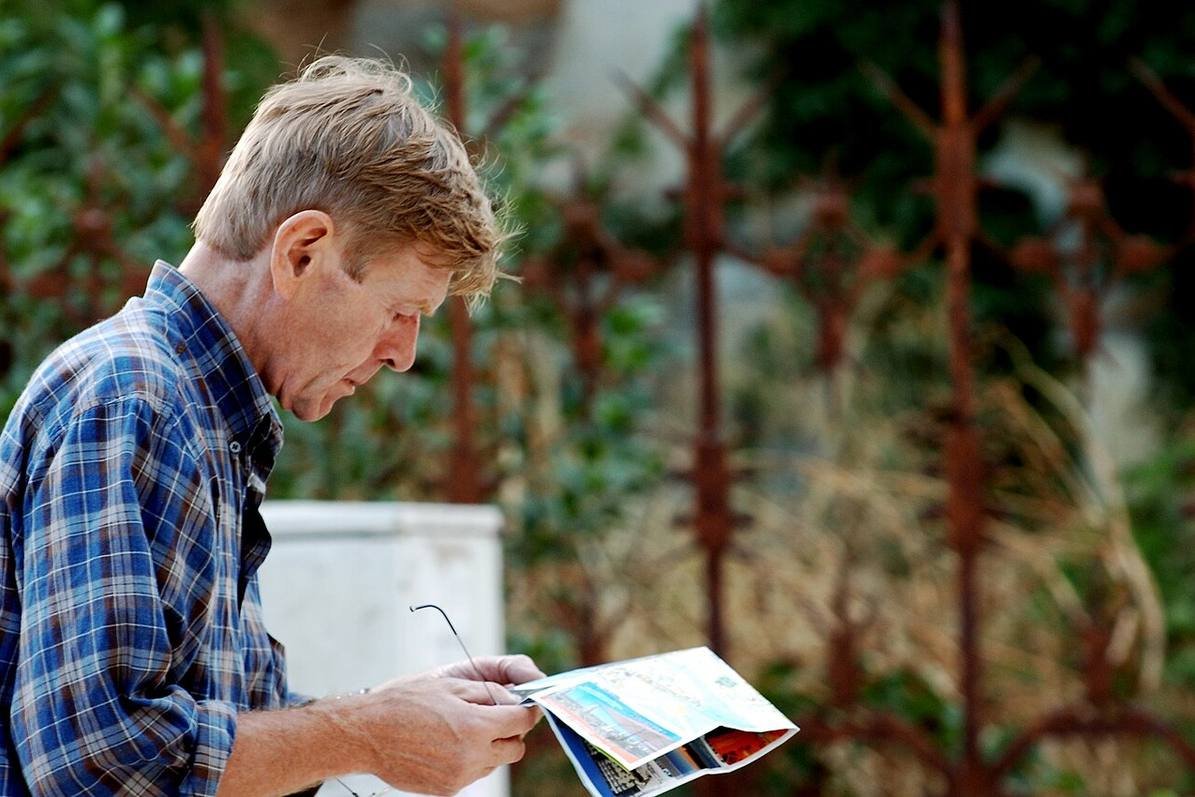
A map is smaller than the land. The scale says how much smaller. On a common walking scale, a short bar of a few centimetres stands for a kilometre on the ground. Measure with the bar, or with the edge of a compass, rather than guessing from the thumbnail.
Most maps in Britain put grid north at the top of the sheet. A north arrow, or the grid lines themselves, shows that. To set the map, turn it until the features in front of you sit in the same places as the marks on the paper. A compass makes this easier in fog, when a church tower is no longer there to aim at.
Scale and direction
Contour lines join points of equal height. When the lines sit close together, the slope is steep. When they are far apart, the ground is gentle. A path that crosses many contours in a short distance will feel like a climb even if it looks brief on the sheet.
Water is usually drawn in blue, woodland in green, and roads in a colour of their own. The key, printed in the margin, is the dictionary. Do not assume a dashed line is a right of way until the key says so. Some dashed lines are only fences or parish boundaries.
Contours and the key
Grid numbers along the edges let you name a square. Read the line along the bottom first, then the line up the side. That pair of numbers is enough to tell someone where you are, or to find a square a friend has named.
A paper map does not go flat when the battery dies, and it shows the land around the route, not only the line you meant to follow. Fold it so the next few kilometres stay in view, and keep it in a pocket that rain cannot fill.
Scale and direction
A paper map is a scaled drawing of the ground. Scale, north, contours, and the key turn the sheet into a route. A map is smaller than the land. The scale says how much smaller.
Put those two statements side by side. The first sets the condition. The second says what happens once that condition is met. How to read a paper map needs both. Drop the first and the second has nothing to explain. Drop the second and the first is only the scene.
Contours and the key
The scale says how much smaller. On a common walking scale, a short bar of a few centimetres stands for a kilometre on the ground.
The order is the explanation. What the first sentence names has to be there before the result in the second sentence can show up. The piece does not ask you to accept the result first and hunt for a cause afterwards.
A check you can make
On a common walking scale, a short bar of a few centimetres stands for a kilometre on the ground. Measure with the bar, or with the edge of a compass, rather than guessing from the thumbnail.
A fair check is sequential. Confirm the first statement. Then see whether the second is the result of it, rather than a separate fact parked in the same piece. If the result shows up without the condition, this account does not cover what you are looking at.
The limit of the claim
Measure with the bar, or with the edge of a compass, rather than guessing from the thumbnail. Most maps in Britain put grid north at the top of the sheet.
The two statements do different jobs. One says what is there, what it is made of, or what acts on it. The other says the change that follows. The title names the change. It is not an inventory of parts.
The same steps, in order
Most maps in Britain put grid north at the top of the sheet. A north arrow, or the grid lines themselves, shows that.
Nothing in the second statement cancels the first. It carries the first forward or marks the limit of it. Remember only the result, and the cause goes missing. Remember only the cause, and you will not know what the piece says happens next.
Why the order matters
A north arrow, or the grid lines themselves, shows that. To set the map, turn it until the features in front of you sit in the same places as the marks on the paper.
Read them as one path. Start at the first full stop and do not skip to the outcome. The words between the two statements are the mechanism. The title is the name of that path, not a second claim.
Condition, then outcome
To set the map, turn it until the features in front of you sit in the same places as the marks on the paper. A compass makes this easier in fog, when a church tower is no longer there to aim at.
The first statement can be true and still not finish the job. The second statement is the job finishing. Hold both, and the paragraph above stops being a list. It becomes the reason the title is worded as it is.
What the title is naming
A compass makes this easier in fog, when a church tower is no longer there to aim at. Contour lines join points of equal height.
If you wanted a shorter version, it would be those two sentences and nothing else. Everything added around them is there so the dependence is obvious: the second does not happen unless the first has happened.
What has to come first
Contour lines join points of equal height. When the lines sit close together, the slope is steep.
Put those two statements side by side. The first sets the condition. The second says what happens once that condition is met. How to read a paper map needs both. Drop the first and the second has nothing to explain. Drop the second and the first is only the scene.
The result that follows
When the lines sit close together, the slope is steep. When they are far apart, the ground is gentle.
The order is the explanation. What the first sentence names has to be there before the result in the second sentence can show up. The piece does not ask you to accept the result first and hunt for a cause afterwards.
A check you can make
When they are far apart, the ground is gentle. A path that crosses many contours in a short distance will feel like a climb even if it looks brief on the sheet.
A fair check is sequential. Confirm the first statement. Then see whether the second is the result of it, rather than a separate fact parked in the same piece. If the result shows up without the condition, this account does not cover what you are looking at.
The limit of the claim
A path that crosses many contours in a short distance will feel like a climb even if it looks brief on the sheet. Water is usually drawn in blue, woodland in green, and roads in a colour of their own.
The two statements do different jobs. One says what is there, what it is made of, or what acts on it. The other says the change that follows. The title names the change. It is not an inventory of parts.
The same steps, in order
Water is usually drawn in blue, woodland in green, and roads in a colour of their own. The key, printed in the margin, is the dictionary.
Nothing in the second statement cancels the first. It carries the first forward or marks the limit of it. Remember only the result, and the cause goes missing. Remember only the cause, and you will not know what the piece says happens next.
Why the order matters
The key, printed in the margin, is the dictionary. Do not assume a dashed line is a right of way until the key says so.
Read them as one path. Start at the first full stop and do not skip to the outcome. The words between the two statements are the mechanism. The title is the name of that path, not a second claim.
Condition, then outcome
Do not assume a dashed line is a right of way until the key says so. Some dashed lines are only fences or parish boundaries.
The first statement can be true and still not finish the job. The second statement is the job finishing. Hold both, and the paragraph above stops being a list. It becomes the reason the title is worded as it is.
What the title is naming
Some dashed lines are only fences or parish boundaries. Grid numbers along the edges let you name a square.
If you wanted a shorter version, it would be those two sentences and nothing else. Everything added around them is there so the dependence is obvious: the second does not happen unless the first has happened.
What has to come first
Grid numbers along the edges let you name a square. Read the line along the bottom first, then the line up the side.
Put those two statements side by side. The first sets the condition. The second says what happens once that condition is met. How to read a paper map needs both. Drop the first and the second has nothing to explain. Drop the second and the first is only the scene.
The result that follows
Read the line along the bottom first, then the line up the side. That pair of numbers is enough to tell someone where you are, or to find a square a friend has named.
The order is the explanation. What the first sentence names has to be there before the result in the second sentence can show up. The piece does not ask you to accept the result first and hunt for a cause afterwards.
A check you can make
That pair of numbers is enough to tell someone where you are, or to find a square a friend has named. A paper map does not go flat when the battery dies, and it shows the land around the route, not only the line you meant to follow.
A fair check is sequential. Confirm the first statement. Then see whether the second is the result of it, rather than a separate fact parked in the same piece. If the result shows up without the condition, this account does not cover what you are looking at.
The limit of the claim
A paper map does not go flat when the battery dies, and it shows the land around the route, not only the line you meant to follow. Fold it so the next few kilometres stay in view, and keep it in a pocket that rain cannot fill.
The two statements do different jobs. One says what is there, what it is made of, or what acts on it. The other says the change that follows. The title names the change. It is not an inventory of parts.
The same steps, in order
A map is smaller than the land. The scale says how much smaller.
Nothing in the second statement cancels the first. It carries the first forward or marks the limit of it. Remember only the result, and the cause goes missing. Remember only the cause, and you will not know what the piece says happens next.
Why the order matters
The scale says how much smaller. On a common walking scale, a short bar of a few centimetres stands for a kilometre on the ground.
Read them as one path. Start at the first full stop and do not skip to the outcome. The words between the two statements are the mechanism. The title is the name of that path, not a second claim.
No correction has been appended to this story. If a line is wrong, tell the newsroom.