
Why coastal paths follow a contour
A coast path often runs level along the cliff rather than dipping to the beach and back. The line is a compromise between a view, a dry route, and ground that stays put.
Listen is a Plus feature Upgrade
Listening is not supported in this browser.
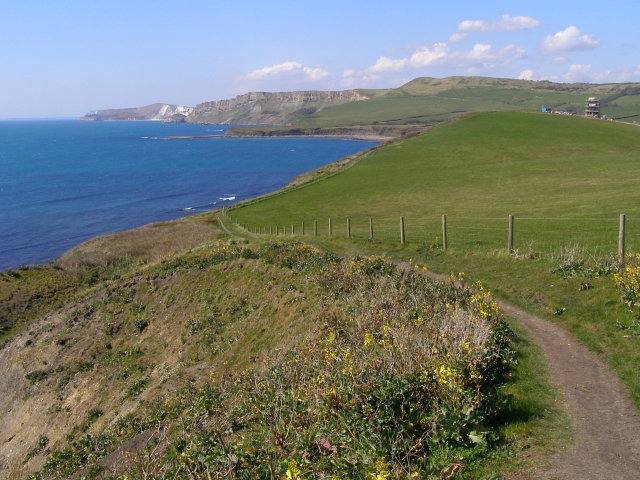
Contour lines on a map are height. A path that follows one contour neither climbs nor drops much. On a cliff coast that means walking the lip of the land, with the sea to one side, instead of a staircase down to every cove.
The beach is a poor through-route. Tides cover it. Boulders and loose shingle are slow. Some coves have no way out at the far end. A path above the tide is open for more of the day, and it connects headlands that the shore cannot.
A level line
Cliff edges move. Erosion takes a metre in a storm and almost nothing for a decade. Paths are set a little inland of the edge, and they are moved when the edge arrives. The line you walk may not be the line on an old map. A fresh sign beats a memory.
The level line is also kinder. A route that drops to sea level and climbs out again, cove after cove, spends the day on the climbs. The contour spends it on the walk. That is why long-distance coast paths feel long in kilometres and, on a good day, steady underfoot.
Why the beach is not the path
Rights of way and open access set where you may legally be. The contour decides, within that permission, where the walking is practical. Gates, stiles, and the occasional steps are the places the ideal line has to meet a field boundary.
Read the tide if you do drop to a beach, and read the map before you assume the path returns. The contour is the reliable thread. The shore is a side trip with a clock on it.
A level line
A coast path often runs level along the cliff rather than dipping to the beach and back. The line is a compromise between a view, a dry route, and ground that stays put. Contour lines on a map are height. A path that follows one contour neither climbs nor drops much.
Put those two statements side by side. The first sets the condition. The second says what happens once that condition is met. Why coastal paths follow a contour needs both. Drop the first and the second has nothing to explain. Drop the second and the first is only the scene.
Why the beach is not the path
A path that follows one contour neither climbs nor drops much. On a cliff coast that means walking the lip of the land, with the sea to one side, instead of a staircase down to every cove.
The order is the explanation. What the first sentence names has to be there before the result in the second sentence can show up. The piece does not ask you to accept the result first and hunt for a cause afterwards.
A check you can make
On a cliff coast that means walking the lip of the land, with the sea to one side, instead of a staircase down to every cove. The beach is a poor through-route.
A fair check is sequential. Confirm the first statement. Then see whether the second is the result of it, rather than a separate fact parked in the same piece. If the result shows up without the condition, this account does not cover what you are looking at.
The limit of the claim
The beach is a poor through-route. Tides cover it.
The two statements do different jobs. One says what is there, what it is made of, or what acts on it. The other says the change that follows. The title names the change. It is not an inventory of parts.
The same steps, in order
Tides cover it. Boulders and loose shingle are slow.
Nothing in the second statement cancels the first. It carries the first forward or marks the limit of it. Remember only the result, and the cause goes missing. Remember only the cause, and you will not know what the piece says happens next.
Why the order matters
Boulders and loose shingle are slow. Some coves have no way out at the far end.
Read them as one path. Start at the first full stop and do not skip to the outcome. The words between the two statements are the mechanism. The title is the name of that path, not a second claim.
Condition, then outcome
Some coves have no way out at the far end. A path above the tide is open for more of the day, and it connects headlands that the shore cannot.
The first statement can be true and still not finish the job. The second statement is the job finishing. Hold both, and the paragraph above stops being a list. It becomes the reason the title is worded as it is.
What the title is naming
A path above the tide is open for more of the day, and it connects headlands that the shore cannot. Cliff edges move.
If you wanted a shorter version, it would be those two sentences and nothing else. Everything added around them is there so the dependence is obvious: the second does not happen unless the first has happened.
What has to come first
Cliff edges move. Erosion takes a metre in a storm and almost nothing for a decade.
Put those two statements side by side. The first sets the condition. The second says what happens once that condition is met. Why coastal paths follow a contour needs both. Drop the first and the second has nothing to explain. Drop the second and the first is only the scene.
The result that follows
Erosion takes a metre in a storm and almost nothing for a decade. Paths are set a little inland of the edge, and they are moved when the edge arrives.
The order is the explanation. What the first sentence names has to be there before the result in the second sentence can show up. The piece does not ask you to accept the result first and hunt for a cause afterwards.
A check you can make
Paths are set a little inland of the edge, and they are moved when the edge arrives. The line you walk may not be the line on an old map.
A fair check is sequential. Confirm the first statement. Then see whether the second is the result of it, rather than a separate fact parked in the same piece. If the result shows up without the condition, this account does not cover what you are looking at.
The limit of the claim
The line you walk may not be the line on an old map. A fresh sign beats a memory.
The two statements do different jobs. One says what is there, what it is made of, or what acts on it. The other says the change that follows. The title names the change. It is not an inventory of parts.
The same steps, in order
A fresh sign beats a memory. The level line is also kinder.
Nothing in the second statement cancels the first. It carries the first forward or marks the limit of it. Remember only the result, and the cause goes missing. Remember only the cause, and you will not know what the piece says happens next.
Why the order matters
The level line is also kinder. A route that drops to sea level and climbs out again, cove after cove, spends the day on the climbs.
Read them as one path. Start at the first full stop and do not skip to the outcome. The words between the two statements are the mechanism. The title is the name of that path, not a second claim.
Condition, then outcome
A route that drops to sea level and climbs out again, cove after cove, spends the day on the climbs. The contour spends it on the walk.
The first statement can be true and still not finish the job. The second statement is the job finishing. Hold both, and the paragraph above stops being a list. It becomes the reason the title is worded as it is.
No correction has been appended to this story. If a line is wrong, tell the newsroom.