
Why roads have cat’s eyes
Cat’s eyes are reflective road studs. A glass corner sends headlight beams back to the driver so the lane shows up in the dark.
Listen is a Plus feature Upgrade
Listening is not supported in this browser.
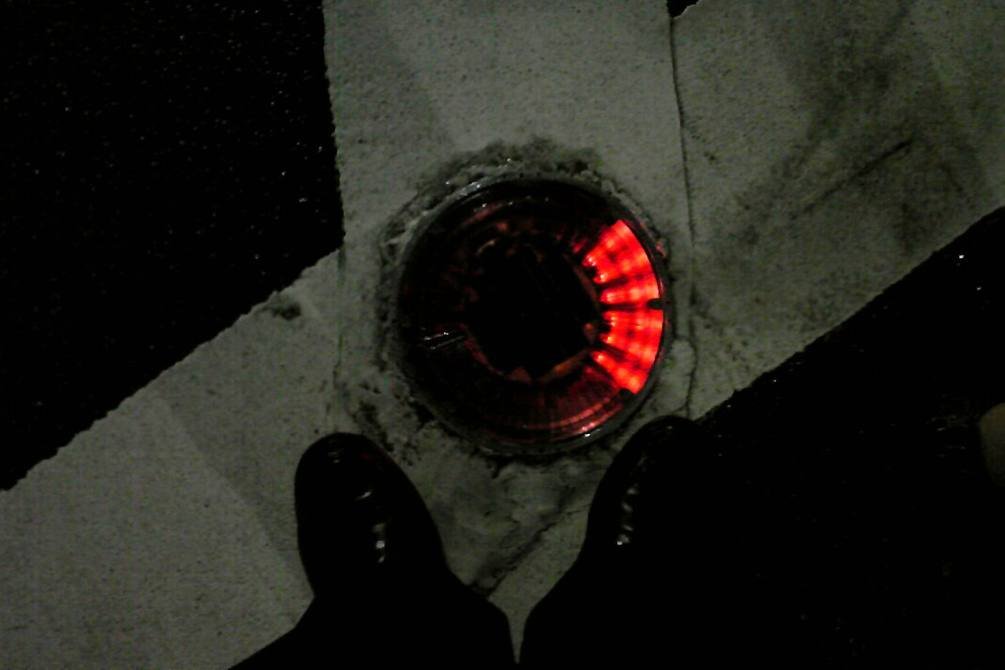
A painted white line disappears when it is dark and wet. A cat’s eye is a stud set into the road, with glass or plastic reflectors facing the traffic. Your headlights strike it and a bright point comes back.
The reflector is a corner-cube, a shape with three faces at right angles. Light that enters bounces off the faces and returns the way it came. It does not need a battery. The car supplies the light.
A reflector in the road
The inventor’s version, widely used in Britain from the 1930s, put the reflectors in a rubber housing. When a wheel passes over the stud, the rubber flexes and the glass drops slightly. The flexing also wipes the glass against a rubber pad, which is why the studs stay cleaner than a plain marker.
Different colours mark different places. White studs usually divide lanes or mark the centre. Red studs mark the left edge of a carriageway. Amber marks the right edge of a dual carriageway or the central reservation. Green marks a lay-by or a slip road. The colours are a code, not a decoration.
Why they survive traffic
The studs are a guide, not a barrier. They do not stop a car leaving the lane. They tell you where the lane is when paint is hard to see.
Modern roads also use raised plastic studs and retroreflective paint. The principle of the cat’s eye remains: send the headlight beam back to the driver who sent it.
A reflector in the road
Cat’s eyes are reflective road studs. A glass corner sends headlight beams back to the driver so the lane shows up in the dark. A painted white line disappears when it is dark and wet. A cat’s eye is a stud set into the road, with glass or plastic reflectors facing the traffic.
Put those two statements side by side. The first sets the condition. The second says what happens once that condition is met. Why roads have cat’s eyes needs both. Drop the first and the second has nothing to explain. Drop the second and the first is only the scene.
Why they survive traffic
A cat’s eye is a stud set into the road, with glass or plastic reflectors facing the traffic. Your headlights strike it and a bright point comes back.
The order is the explanation. What the first sentence names has to be there before the result in the second sentence can show up. The piece does not ask you to accept the result first and hunt for a cause afterwards.
A check you can make
Your headlights strike it and a bright point comes back. The reflector is a corner-cube, a shape with three faces at right angles.
A fair check is sequential. Confirm the first statement. Then see whether the second is the result of it, rather than a separate fact parked in the same piece. If the result shows up without the condition, this account does not cover what you are looking at.
The limit of the claim
The reflector is a corner-cube, a shape with three faces at right angles. Light that enters bounces off the faces and returns the way it came.
The two statements do different jobs. One says what is there, what it is made of, or what acts on it. The other says the change that follows. The title names the change. It is not an inventory of parts.
The same steps, in order
Light that enters bounces off the faces and returns the way it came. It does not need a battery.
Nothing in the second statement cancels the first. It carries the first forward or marks the limit of it. Remember only the result, and the cause goes missing. Remember only the cause, and you will not know what the piece says happens next.
Why the order matters
It does not need a battery. The car supplies the light.
Read them as one path. Start at the first full stop and do not skip to the outcome. The words between the two statements are the mechanism. The title is the name of that path, not a second claim.
Condition, then outcome
The car supplies the light. The inventor’s version, widely used in Britain from the 1930s, put the reflectors in a rubber housing.
The first statement can be true and still not finish the job. The second statement is the job finishing. Hold both, and the paragraph above stops being a list. It becomes the reason the title is worded as it is.
What the title is naming
The inventor’s version, widely used in Britain from the 1930s, put the reflectors in a rubber housing. When a wheel passes over the stud, the rubber flexes and the glass drops slightly.
If you wanted a shorter version, it would be those two sentences and nothing else. Everything added around them is there so the dependence is obvious: the second does not happen unless the first has happened.
What has to come first
When a wheel passes over the stud, the rubber flexes and the glass drops slightly. The flexing also wipes the glass against a rubber pad, which is why the studs stay cleaner than a plain marker.
Put those two statements side by side. The first sets the condition. The second says what happens once that condition is met. Why roads have cat’s eyes needs both. Drop the first and the second has nothing to explain. Drop the second and the first is only the scene.
No correction has been appended to this story. If a line is wrong, tell the newsroom.